Palestinian history is often discussed through politics and conflict, but the best books do far more: they trace identity, land, statehood, displacement, and memory across generations.
This roundup highlights ten carefully chosen titles for readers who want reliable context, from broad overviews to specialized historical studies.
Best 10 Palestinian History Books Picks for 2026
Palestine: A Four Thousand Year History

- Spans Palestine’s history from the earliest records to the present
- Draws on historical sources and archaeological evidence
- Emphasizes the long evolution of Palestinian identity
Best For: Readers who want a panoramic history of Palestine from antiquity to today.
The Iron Cage: The Palestinian Struggle for Statehood

- Traces the statehood struggle from the Mandate era onward
- Connects colonial rule to later Palestinian politics
- Offers a clear, scholarly political history
Best For: Readers who want a concise history of the Palestinian struggle for statehood.
The Hundred Years' War on Palestine

- Presents the conflict from an explicitly Palestinian perspective
- Uses archival sources and family history
- Covers key events from 1917 to the peace process
Best For: Readers who want an explicitly Palestinian account of the modern conflict.
The Palestinian-Israeli Conflict: A Very Short Introduction

- A concise 160-page overview of the conflict
- Breaks history into clear time segments
- Covers major milestones for beginners
Best For: Beginners who want a brief, balanced introduction to the conflict.
The Ethnic Cleansing of Palestine

- Archival account of 1947–1949 events.
- Argues Palestinians were forcibly expelled.
- Strong choice for readers seeking a provocative thesis.
Best For: Readers who want a controversial, evidence-heavy reinterpretation of 1948.
The Israeli-Palestinian Conflict: What Everyone Needs to Know®
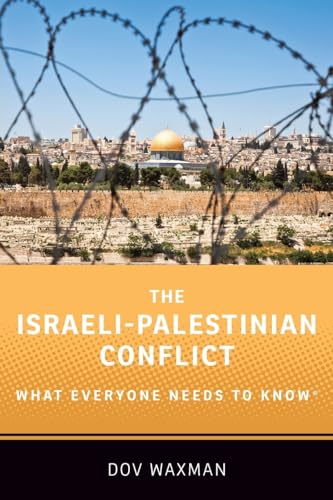
- Jargon-free Q&A format.
- Covers origins through the twenty-first century.
- Balances competing claims from both sides.
Best For: Readers who want a balanced, easy-to-follow overview of the conflict.
The Forgotten Palestinians

- Focuses on Palestinians who became Israeli citizens.
- Uses archival and interview evidence.
- Examines discrimination in daily life and civil rights.
Best For: Readers who want a focused history of Palestinians inside Israel after 1948.
Palestinian Identity: The Construction of Modern National Consciousness

- Examines the formation of modern Palestinian national identity
- Includes a new introduction by Rashid Khalidi
- Connects identity to the struggle for nationhood
Best For: Readers seeking a deep introduction to Palestinian national consciousness
A History of Palestine: From the Ottoman Conquest to the Founding of the State of Israel

- Covers Palestine from the Ottoman era to 1948
- Explores social, economic, and cultural change
- Looks at Arab-Jewish interactions across key periods
Best For: Readers wanting a detailed chronological overview of Palestine
A History of Modern Palestine: One Land, Two Peoples

- Covers Palestine from the Ottoman period to the early 2000s
- Includes updated discussion of Oslo and the second intifada
- Centers the lived experience of Palestinians
Best For: Readers wanting a modern history that goes beyond 1948
Ancient & Long-View Pick – Palestine: A Four Thousand Year History
If you’re looking for palestinian history books that go beyond the modern conflict, this volume offers a sweeping, deeply researched account of Palestine from the earliest textual references to the present day. It is a strong choice for readers who want historical depth, archaeological context, and a broad civilizational frame rather than a narrow political overview.
Best For: Readers who want a panoramic history of Palestine from antiquity to today.
Pros:
- Covers Palestine across roughly four millennia, from Bronze Age roots to the modern era.
- Uses historical texts and archaeological evidence to support its arguments.
- Focuses on the evolution of Palestine and Palestinian identity over time.
- Offers a corrective to simplified or mythologized narratives.
Cons:
- At 464 pages, it is a substantial read.
- Its broad scope may be more than casual readers need.
This is the most expansive option in the group, making it especially useful if you want a single book that connects ancient Palestine to contemporary debates. It’s a strong pick for serious readers who value long historical context.
Statehood & Struggle Pick – The Iron Cage: The Palestinian Struggle for Statehood
Among palestinian history books, this one is especially useful if you want a focused explanation of why the Palestinian statehood project ran into repeated dead ends. Khalidi traces the story from the British Mandate era through the PLO, Palestinian Authority, and Hamas, giving readers a clear political and historical framework.
Best For: Readers who want a concise history of the Palestinian struggle for statehood.
Pros:
- Explains the roots of the statehood struggle in the Mandate period.
- Connects historical developments to later Palestinian politics and institutions.
- Written as a lucid, accessible narrative grounded in scholarship.
- Provides context for the conflict’s lasting impasse.
Cons:
- Focused more on statehood politics than on very early Palestinian history.
- Published in 2007, so it does not cover the most recent developments.
This is a strong mid-length choice for readers who want a political-historical interpretation rather than an all-encompassing national history. It’s especially valuable for understanding the structural obstacles described in the title.
Conflict History Pick – The Hundred Years' War on Palestine
If you want palestinian history books that center Palestinian perspective, this bestseller is a major one to consider. Khalidi frames the conflict as a century-long war on the Palestinians, using family history and archival material to explain key turning points from the Balfour Declaration to the peace process.
Best For: Readers who want an explicitly Palestinian account of the modern conflict.
Pros:
- Offers the first general account of the conflict told from an explicitly Palestinian perspective.
- Draws on archival sources and family history for a rich narrative approach.
- Covers major episodes from 1917 through the modern peace process.
- Widely recognized with major awards and bestseller status.
Cons:
- Its argument is strongly interpretive, so readers seeking neutrality may prefer a broader survey as well.
- At 336 pages, it is substantial but not exhaustive on every period.
This book is especially compelling if you want a clear, argument-driven history of how the modern conflict developed. It pairs well with a more introductory survey or a longer-term historical study.
Quick-Start Intro Pick – The Palestinian-Israeli Conflict: A Very Short Introduction
For readers browsing palestinian history books for a short, accessible overview, this Oxford introduction is an efficient starting point. Bunton breaks the conflict into manageable historical segments, helping beginners understand the main turning points without committing to a longer academic volume.
Best For: Beginners who want a brief, balanced introduction to the conflict.
Pros:
- Very concise at 160 pages, making it easy to read quickly.
- Organizes the history into clear twenty-year segments.
- Covers major milestones like the Balfour Declaration and UN Partition Plan.
- Part of Oxford’s respected Very Short Introductions series.
Cons:
- Too brief for readers wanting a deeply detailed history.
- Focuses on an overview rather than extended archival argument.
This is the easiest entry point on the list and a smart pick if you want context before moving to longer books. It works well as a primer, classroom supplement, or quick reference.
Controversial Origins – The Ethnic Cleansing of Palestine
If you’re comparing Palestinian history books and want a forceful, archive-driven account of 1947–1949, this title is built for readers who want a direct challenge to the standard narrative. Ilan Pappé argues that hundreds of Palestinian villages were destroyed and that civilians were expelled during Israel’s founding, making this a highly pointed choice for readers interested in the origins of the refugee question.
Best For: Readers who want a controversial, evidence-heavy reinterpretation of 1948 and the Palestinian refugee story.
Pros:
- Draws on archival evidence to support its argument.
- Focuses tightly on the 1947–1949 period and its consequences.
- Useful for readers interested in the roots of the current Middle East crisis.
- Written by a widely discussed Israeli historian.
Cons:
- Its thesis is explicitly controversial.
- Centers one strongly argued interpretation of events.
- Best suited to readers comfortable with a confrontational perspective.
This is one of the more provocative Palestinian history books, and it stands out for readers who want a book that is both historically grounded and unapologetically argumentative. If you want a challenging read rather than a neutral overview, it fits that brief well.
Clear Overview – The Israeli-Palestinian Conflict: What Everyone Needs to Know®
For shoppers comparing Palestinian history books and wanting a clear starting point, this Q&A guide is designed to explain the conflict without jargon. Dov Waxman covers the conflict from its nineteenth-century origins through the twenty-first century, making it a practical pick for readers who want competing narratives laid out in an accessible format.
Best For: Readers who want a balanced, easy-to-follow overview of the conflict and its main questions.
Pros:
- Uses an engaging, jargon-free Q&A format.
- Explains key events from the nineteenth century to today.
- Presents the competing claims and narratives of both sides.
- Designed to answer common questions clearly and concisely.
Cons:
- More of an overview than a deep archival study.
- Broad scope means it won’t linger long on any single episode.
- Readers seeking a highly specialized historical argument may want a narrower book.
This is a strong option if you want one of the most approachable Palestinian history books for building context quickly. It prioritizes clarity and balance, which makes it useful for first-time readers or anyone who wants a reliable reference-style guide.
Overlooked Citizens – The Forgotten Palestinians
If you’re building a shortlist of Palestinian history books, this one stands out for shifting attention to Palestinians who became Israeli citizens after 1948. Ilan Pappé examines how they fared under Jewish rule, using archival and interview material to explore discrimination in housing, education, and civil rights.
Best For: Readers who want a focused history of Palestinians inside Israel and their lived experience after 1948.
Pros:
- Centers a group often overlooked in broader Israel-Palestine discussions.
- Uses archival and interview material.
- Examines housing, education, and civil rights issues.
- Offers a new perspective on minority-state relations.
Cons:
- Focused scope may not cover the conflict as a whole.
- Primarily examines one segment of the Palestinian experience.
- Best for readers interested in policy and civil rights history.
This book is a useful complement to more general Palestinian history books because it narrows in on the Palestinians within Israel rather than the conflict only in the West Bank or Gaza. For readers who want a more specific and socially grounded account, it offers a strong and readable angle.
Foundational Identity Study – Palestinian Identity: The Construction of Modern National Consciousness
If you want one of the most important palestinian history books for understanding modern nationhood, this volume by Rashid Khalidi is a focused place to start. It examines how Palestinian identity formed over time and includes a new introduction that reflects on the work’s significance and its connection to the struggle for nationhood.
Best For: Readers who want a compact, widely cited introduction to Palestinian national consciousness and its development.
Pros:
- Explores the construction of modern Palestinian identity in depth
- Includes a new introduction by the author reflecting on the past decade
- Connects identity formation to the broader struggle for nationhood
- Substantial but manageable length at 310 pages
Cons:
- Focused more on identity and nationalism than a broad general chronology
- May be best suited to readers already interested in historical analysis
This is a strong choice if your goal is to understand how modern Palestinian consciousness developed and why it remains central to the question of statehood. It is more analytical than survey-style, which makes it especially valuable for serious readers.
Broad Historical Survey – A History of Palestine: From the Ottoman Conquest to the Founding of the State of Israel
A History of Palestine: From the Ottoman Conquest to the Founding of the State of Israel
Check Price On AmazonFor readers comparing palestinian history books, this single-volume history offers a careful English-language overview from the Ottoman period through the founding of Israel in 1948. Gudrun Krämer emphasizes social and economic factors, the meanings attached to the land, and the interactions of Arabs and Jews across major historical shifts.
Best For: Readers who want a detailed, balanced chronological overview of Palestine’s long historical development.
Pros:
- Covers Palestine from Ottoman conquest to 1948 in one volume
- Addresses prebiblical, biblical, Islamic, Christian, and Jewish traditions tied to the land
- Gives attention to social and economic factors, not just politics
- Examines Arab-Jewish interactions and their impact on the region
Cons:
- Stops at 1948, so it does not cover the later modern period
- The scope may feel broad for readers wanting a narrower topic study
This is a strong reference-style choice if you want a structured history that explains how Palestine evolved across empires, reforms, and the Mandate period. It works especially well as a foundation before moving on to more specialized modern accounts.
Modern Political History – A History of Modern Palestine: One Land, Two Peoples
If you need palestinian history books that carry the story into the late twentieth and early twenty-first centuries, this edition of Ilan Pappé’s history is a strong option. It traces events from the Ottoman period through the British Mandate, the 1948 founding of Israel, and later conflict, including the Oslo years, the second intifada, and the separation wall.
Best For: Readers who want a modern history that continues beyond 1948 and covers the Oslo era and its aftermath.
Pros:
- Spans from the nineteenth-century Ottoman period into the early twenty-first century
- Includes updated coverage of the 1990s and early 2000s
- Addresses the failure of Oslo and the two-state solution
- Centers the experiences of men, women, and children of Palestine
Cons:
- Its modern focus may be less useful for readers seeking a deep premodern background
- More concerned with political conflict than with a broad cultural survey
This edition is especially useful if you want a history that follows the arc of modern Palestinian experience into the period after Oslo. It offers a clear narrative of conflict and political change while keeping ordinary Palestinians at the center.
How We Picked These Palestinian History Books
We prioritized books that offer credible historical framing, strong author expertise, and clear value for different kinds of readers. The best selections balance readability with substance, whether the goal is a first introduction or a deeper academic understanding of Palestinian History Books and the modern conflict surrounding them.
We also looked for range: sweeping narratives, concise primers, and works focused on identity, statehood, displacement, and historical interpretation. That mix helps buyers choose a book that matches their current level of knowledge.
Quick Comparison
If you want a broad historical overview, choose a title that covers Palestine across centuries. If you need a concise explainer, a short introductory volume is a better fit. For readers interested in political development, state formation, or national identity, specialized academic works usually provide more detail and stronger sourcing.
Key Buying Factors for Palestinian History Books
Scope and Time Period
Some books cover ancient and Ottoman-era history, while others focus mainly on the 20th century and the Israeli-Palestinian conflict. Pick the time span that best matches your goal.
Reading Level
Academic titles often provide richer analysis but may be denser. Introductory books are better for general readers, students, or anyone new to the topic.
Perspective and Purpose
Different authors emphasize diplomacy, nationalism, social history, displacement, or conflict studies. Look for a perspective that aligns with what you want to understand, while still aiming for balanced, well-documented work.
Use of Sources
Strong Palestinian History Books typically rely on archival evidence, historical scholarship, and careful citation. That matters if you want a book you can trust for learning, discussion, or research.
Who Should Buy Which Palestinian History Books?
New readers should start with an accessible overview or very short introduction. Students and researchers may prefer titles with stronger academic framing and deeper historical argument. If you want a fuller understanding of identity, nationalism, or statehood, choose a specialized study rather than a general primer.
For most buyers, the ideal approach is to pair one broad survey with one focused analysis. That combination gives you both the big picture and the deeper context behind the events that shaped modern Palestinian history.