Choosing palestine geography books for kids is about more than maps. The best picks help young readers understand location, landmarks, culture, and the lived experience of place in a way that feels engaging and age-appropriate.
Whether you want a simple first atlas, a storybook approach, or a workbook with activities, this roundup focuses on books that make geography easier for children to connect with and remember.
Best 10 Palestine Geography Books for Kids Picks for 2026
Countries of the World

- Profiles 196 nations with maps and photos
- Designed for ages 9–12
- Strong visual encyclopedia format
Best For: older kids who want a picture-heavy world geography overview
Discover Palestine

- Rhymes, images, and simple history for kids
- Covers food, traditions, holidays, and customs
- Includes a parent page for discussion
Best For: younger children beginning to learn about Palestine
These Olive Trees

- Picture book set in 1967 Nablus, Palestine
- Focuses on olive trees, memory, and home
- Illustrated read-aloud for ages 4–10
Best For: read-alouds about land, family, and Palestinian heritage
My ABC's of Palestine
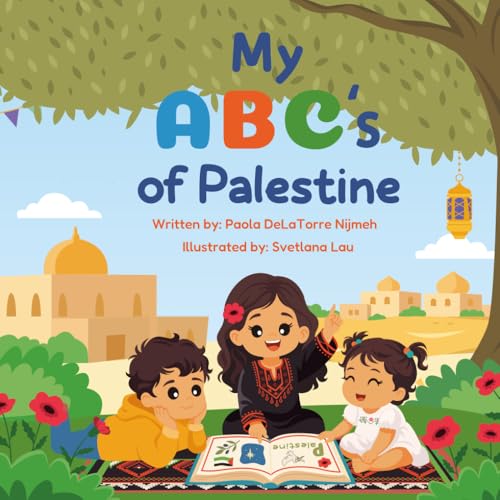
- Arabic-English alphabet book for ages 2–6
- Uses rhymes, bright art, and cultural vocabulary
- Includes glossary and educator notes
Best For: preschoolers starting bilingual or heritage learning
A Map for Falasteen: A Palestinian Child's Search for Home

- Picture book about a child searching for Palestine on a map
- Includes family stories, illustrations, and back matter
- Best for ages 3-7 and story-led learning
Best For: Ages 3-7, story-led learning about Palestine and home
Palestine: Workbook and educational

- Interactive workbook with activities and facts
- Covers landmarks, culture, and Palestinian history
- Best for ages 7-10 in home or classroom use
Best For: Ages 7-10, hands-on study in homeschool or classroom settings
Countries of the Middle East for Young Explorers

- Atlas with flags, maps, and fun facts for 15 countries
- Covers the Middle East in regional groupings
- Best for ages 10-14 and classroom comparison
Best For: Ages 10-14, a broader Middle East atlas with maps and facts
Where is Palestine?

- Interactive look-and-find scenes
- Introduces original Palestinian city names
- 24 pages, baby to 12 years
Best For: Families wanting a playful first Palestine geography book
The Magic Map of Palestine

- Story about a hidden map in an olive tree
- 40 pages with a geography-adventure feel
- Listed reading age: 6 to 10
Best For: Kids who learn best through adventure-led geography stories
Journey Through Palestine

- Explores hills, groves, Jerusalem, and the Dead Sea
- Colorful maps are intentionally unlabeled
- Designed for ages 6+ and discussion
Best For: Visual learners and classroom-style geography discussions
Global Geography Reference – Countries of the World
Countries of the World: A Visual World Geography Encyclopedia for Kids (DK Our World in Pictures)
Check Price On AmazonIf you want palestine geography books for kids that also help children understand the wider world, this DK encyclopedia is a strong pick. It offers a highly visual tour of all 196 nations, with maps, photos, diagrams, and easy-to-scan facts that make country study more engaging for ages 9–12.
Best For: Kids who learn best through pictures, maps, and short country profiles while exploring world geography.
Pros:
- Covers every country with full-color maps and profile pages
- Packed with more than 1,000 images, diagrams, and illustrations
- Accessible for middle-grade readers ages 9–12
- Includes geography, wildlife, traditions, and arts
Cons:
- Not focused specifically on Palestine
- Best suited to older children rather than toddlers or early readers
This is the most general option in the roundup, but it works well as a broad geography companion for families who want context beyond one country. Its strength is the visual format, which makes it easier for kids to browse and compare places around the world.
Palestinian Culture Intro – Discover Palestine
For families searching for palestine geography books for kids, this slim picture book offers a warm introduction to Palestinian life, traditions, and landmarks. It uses rhymes, colorful images, and a child-friendly simple history to make the subject approachable for ages 5–12.
Best For: Young readers who want an introductory, culture-forward look at Palestine with simple explanations.
Pros:
- Explores culture, traditions, food, clothes, holidays, and customs
- Includes a simple history section written for children
- Rhyming text and colorful images keep it approachable
- Parent’s page adds guidance for discussing current events
Cons:
- Very short at 33 pages
- More culture and history-focused than map-heavy geography
This is a heartfelt choice if you want an age-appropriate starting point rather than a detailed atlas. It is especially useful for families who want to talk about Palestine through identity, traditions, and empathy.
Story of Land and Memory – These Olive Trees
Among palestine geography books for kids, this picture book stands out for its emotional focus on place, memory, and family connection to the land. Set in 1967 Nablus, it follows Oraib and her olive trees, using a lyrical story to show how one child experiences home, loss, and hope.
Best For: Families looking for a beautifully illustrated story about Palestinian connection to land and heritage.
Pros:
- Shows a Palestinian family’s ties to the land through olive trees
- Emotionally rich story with themes of hope and resilience
- Age-appropriate for children roughly 4–10
- Strong picture-book format with full-color illustrations
Cons:
- Not a factual geography or reference book
- More narrative than informational
This is a meaningful pick if your goal is to help children understand Palestine through story rather than through maps or encyclopedic facts. It works especially well as a read-aloud that connects geography with lived experience.
Bilingual Alphabet Starter – My ABC's of Palestine
If you want palestine geography books for kids that begin with language and identity, this bilingual alphabet book is a simple entry point. It introduces Arabic-English vocabulary, Palestinian foods and traditions, and early literacy concepts through bright illustrations and playful rhymes for ages 2–6.
Best For: Toddlers and preschoolers learning letters while being introduced to Palestinian culture.
Pros:
- Bilingual Arabic-English format supports early language learning
- Alphabet-based structure is easy for toddlers and preschoolers
- Includes cultural words tied to family, food, and daily life
- Glossary and educator notes add learning value
Cons:
- Not a map-based geography book
- Best for very young children rather than older elementary readers
This is the most age-appropriate option for early learners, especially in bilingual or heritage-learning homes. It gives children a friendly first connection to Palestine through letters, language, and cultural vocabulary.
Homeland Storybook Pick – A Map for Falasteen: A Palestinian Child's Search for Home
If you want palestine geography books for kids that also open the door to history, identity, and family stories, this picture book is a strong choice. It follows a young Palestinian girl in diaspora as she tries to find Palestine on a map and learns that a homeland can be understood in more than one way.
Best For: Ages 3-7 who benefit from a gentle, story-driven introduction to Palestine and the idea of home.
Pros:
- Uses a simple, relatable school assignment to introduce Palestine
- Includes family perspectives that help explain homeland and belonging
- Features beautiful illustrations and thoughtful back matter
- Recognized as a Kirkus Best Book of 2024 and a Booklist Editors’ Choice 2024
Cons:
- More of a picture book than a reference-style geography book
- Focused on story and reflection rather than maps and place facts
This is a thoughtful pick if you want an emotionally resonant, age-appropriate introduction that connects geography with lived experience. It works especially well for families and classrooms looking for a gentle conversation starter.
Hands-On Learning Pick – Palestine: Workbook and educational
For families searching for palestine geography books for kids that are more interactive, this workbook offers a hands-on way to explore Palestine. It promises engaging activities, facts, and imagery aimed at helping children learn about landmarks, culture, and history through active practice.
Best For: Ages 7-10 who like worksheets, activities, and a structured homeschool or classroom format.
Pros:
- Designed especially for children with engaging activities
- Covers landmarks, culture, and historical facts about Palestine
- Built for classrooms, homeschooling, or learning at home
- Uses vibrant imagery to support the lessons
Cons:
- Less story-driven than a picture book
- Details are limited, so it is harder to judge depth from the listing alone
This workbook is a practical choice if your goal is active learning rather than read-aloud storytelling. It should appeal to kids who enjoy filling in pages and working through activities while learning about Palestine.
Regional Atlas Pick – Countries of the Middle East for Young Explorers
If you want palestine geography books for kids that broaden the map beyond one country, this kid’s atlas is a useful regional option. It covers 15 Middle Eastern countries with flags, maps, fast facts, and fun details, including countries in the Levant such as Israel, Jordan, Lebanon, Syria, and Cyprus.
Best For: Ages 10-14 who want a colorful first atlas of the Middle East with maps and country comparisons.
Pros:
- Includes flags, maps, and fast facts for 15 countries
- Groups countries by region for easier exploration
- Adds fun features like famous places, food, animals, and greetings
- Good fit for classrooms and homeschools
Cons:
- Not focused specifically on Palestine alone
- Best for older kids, so it may not suit younger readers
This atlas works best as a wider regional companion when you want children to understand Palestine in the context of the Middle East. It is especially helpful for kids who enjoy map-based learning and comparing countries side by side.
Look-and-Find Pick – Where is Palestine?
If you want palestine geography books for kids that feel playful and interactive, Where is Palestine? is built for spotting, naming, and exploring. This 24-page picture book follows a superhero friend through cities in Palestine, using look-and-find scenes to keep young readers engaged while introducing original city names and everyday details like kunafa in Nablus and Manara Square.
Best For: Babies through older elementary readers who enjoy search-and-find books and simple place-based learning.
Pros:
- Look-and-find format keeps children actively engaged on each page.
- Introduces some original names of Palestinian cities in a kid-friendly way.
- Short 24-page length works well for quick reading sessions.
- Reading age listed from Baby to 12 years.
Cons:
- Very brief, so it may not satisfy readers wanting deeper geography detail.
- More playful than reference-like, so it is not a dense learning text.
As a starter choice, this book is strongest when you want a fun, hands-on introduction to Palestine rather than a formal atlas. It blends city names, visuals, and familiar cultural touches into a format that is easy for young children to enjoy.
Adventure Map Choice – The Magic Map of Palestine
For shoppers comparing palestine geography books for kids, The Magic Map of Palestine offers a story-driven way to explore place and discovery. The plot begins when Zara and Qita find a hidden map in the roots of an olive tree, making this 40-page book a natural pick for children who like adventure mixed with geography themes.
Best For: Ages 6 to 10 who enjoy adventure stories that lead into map-based exploration.
Pros:
- Adventure premise gives geography learning a storybook feel.
- 40-page length offers a bit more room for exploration than very short books.
- Reading age is clearly listed for ages 6 to 10.
- Part of the Children of Palestine series for readers who want an ongoing set.
Cons:
- The supplied notes give only a brief plot outline, so detail level is hard to gauge.
- Those seeking a highly factual atlas may want something more map-heavy.
This is a solid middle-ground option if you want a geography-themed children’s book with narrative momentum. It should appeal most to kids who stay engaged when learning is wrapped in a quest.
Storybook Atlas – Journey Through Palestine
Journey Through Palestine: A Child’s Storybook Atlas is a strong option if you want palestine geography books for kids that emphasize broad exploration and discussion. It takes young readers across rolling hills, olive groves, Jerusalem, and the Dead Sea, and it uses colorful maps with no text or labels to encourage imagination and conversation at home or in the classroom.
Best For: Children age 6+ who enjoy visual learning, guided discussion, and storybook-style atlas pages.
Pros:
- Covers a range of landscapes and landmarks across Palestine.
- Unlabeled colorful maps encourage interactive learning and discussion.
- Combines geography, history, and culture in one picture-driven book.
- Tailored for curious readers aged 6 and above.
Cons:
- No text or labels on the maps, so it is less reference-like than a traditional atlas.
- May work best with an adult or teacher guiding the conversation.
This is the best fit for families or classrooms that want a gentle, open-ended introduction to place and culture. If you prefer a book that sparks questions rather than one that drills facts, this title stands out.
How We Picked the Best Palestine Geography Books for Kids
We looked for titles that present geography in a kid-friendly format, with clear visuals, accessible language, and a strong connection to Palestine as a place. Since children learn differently, the list includes atlases, picture books, educational workbooks, and story-driven titles that can support different reading levels.
We also favored books that do more than label locations. The strongest Palestine Geography Books for Kids help readers build spatial awareness while also introducing culture, identity, and context in a way that feels respectful and understandable.
Quick Comparison
For the broadest geographic overview, choose a world or regional atlas-style title. For younger children, alphabet, picture-book, and read-aloud formats usually work best. If you want more hands-on learning, a workbook can reinforce map skills, vocabulary, and recall. Families seeking a more personal or narrative connection may prefer story-based books that weave geography into a child’s experience.
Key Buying Factors for Palestine Geography Books for Kids
Age and Reading Level
Match the book to the child’s age first. Younger kids need larger type, simpler sentences, and strong visuals. Older readers can handle denser map detail, captions, and more place-based facts.
Map Quality and Clarity
Look for labels that are easy to read, illustrations that clearly distinguish cities, regions, and landmarks, and maps that are not overcrowded. A good children’s geography book should make orientation feel intuitive, not confusing.
Balance of Facts and Engagement
The best books combine accurate geography with features that keep kids interested, such as activities, illustrations, timelines, flags, or story elements. This balance matters especially when introducing a place children may be encountering for the first time.
Cultural and Historical Context
Geography is easier to understand when it is connected to daily life, language, food, traditions, and community. Books that include this context can make the subject feel more complete and meaningful.
Who Should Buy Which Palestine Geography Books for Kids?
If you are buying for preschool or early elementary readers, choose picture-heavy books, alphabet books, or simple story atlases. For mid-elementary kids, a regional atlas or discovery-style title is often the best fit because it builds map skills and factual knowledge together. For independent readers or homeschool use, workbook-style books can add structure and review.
If your goal is to encourage curiosity and conversation, pick a narrative title that presents place through a child’s perspective. If you want a broader reference that still supports learning about Palestine, a world geography encyclopedia or Middle East atlas can be a useful supplement.
In short, the best choice depends on whether you want first exposure, deeper map practice, or a more personal entry point into the geography of Palestine.