Choosing the right history text can make a big difference in how well students understand Palestine, Israel, and the wider regional context. The best books balance clarity, scholarship, and readability without oversimplifying complex events.
This roundup highlights titles that work well for class reading, research, and independent study, with a mix of broad overviews, focused conflict histories, and academically grounded narratives.
Best 10 Palestine History Books for Students Picks for 2026
Ancient history deep dive
Palestine: A Four Thousand Year History

- Covers Palestine from ancient records to the present
- Draws on archaeology and early textual sources
- Presents a broad, authoritative historical arc
Best For: Students seeking a deep, long-range history of Palestine
Clear conflict overview
The Israeli-Palestinian Conflict: What Everyone Needs to Know®
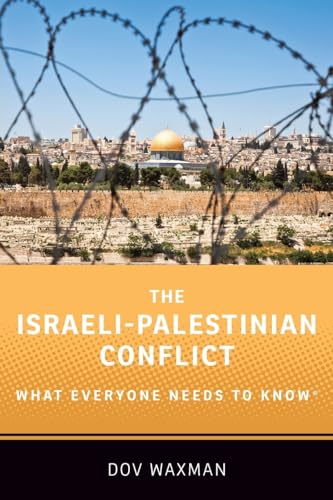
- Explains the conflict in a simple Q&A format
- Covers origins, key issues, and major developments
- Balanced and concise for student readers
Best For: Students who want an accessible introduction to the conflict
Palestinian perspective landmark
The Hundred Years' War on Palestine

- Tells the conflict through a Palestinian lens
- Uses archival research and family history
- Covers major events from 1899 onward
Best For: Students seeking a major Palestinian-perspective history
1936 revolt origin story
Palestine 1936: The Great Revolt and the Roots of the Middle East Conflict

- Focuses on the 1936 Arab Revolt
- Explains its role in Palestinian identity and conflict roots
- Available as an unabridged audiobook
Best For: Students studying the 1936 revolt and conflict origins
Fast-Paced Overview
The Shortest History of Israel and Palestine

- Concise chronology of the conflict’s key turning points
- Includes maps, images, timeline, and glossary
- Adds personal testimony to support the historical narrative
Best For: Students needing a concise, readable introduction
Dual-Narrative Study
Side by Side: Parallel Histories of Israel-Palestine

- Shows Israeli and Palestinian accounts side by side
- Designed for teaching history in conflict settings
- Useful for comparing differing interpretations of key events
Best For: Students studying contested narratives and classroom discussion
Comprehensive Reference
Palestine: A History of the Land and Its People

- Extensive history from ancient eras to the Nakba
- Covers civilizations, religions, and modern political change
- Research-based and presented in an even-handed style
Best For: Students needing a deep reference for research
Editor’s Pick
A Very Short History of the Israel–Palestine Conflict

- Starts the conflict in 1882 for fuller historical context.
- Covers Ottoman Palestine, the British Mandate, and later conflict.
- Short audiobook format suits quick student study.
Best For: Students who need a brief, accessible overview of the conflict’s long historical arc.
Best for Coursework
A History of Modern Palestine: One Land, Two Peoples

- Covers Palestine from the Ottoman era through the Mandate.
- Adds updated material on the 1990s and early 2000s.
- Explains Oslo’s failure and the limits of the two-state solution.
Best For: Students who want a detailed modern history that reaches into Oslo and the second intifada.
Most Scholarly
A History of Palestine: From the Ottoman Conquest to 1948

- Single-volume history of Palestine in English through 1948.
- Covers social, economic, and religious context.
- Useful for studying Arab-Jewish interactions over time.
Best For: Students looking for a detailed, research-oriented history of Palestine through 1948.
Ancient history deep dive – Palestine: A Four Thousand Year History
If you’re looking for palestine history books for students that go beyond a modern conflict timeline, this book offers a sweeping, source-rich account of Palestine from the earliest records to the present. It is especially useful for readers who want a broader historical frame, including archaeology, ancient texts, and the development of Palestinian identity over time.
Best For: Students who want a long-view history of Palestine grounded in ancient sources and modern scholarship.
Pros:
- Traces Palestine’s history across roughly four thousand years
- Uses Egyptian and Assyrian references plus archaeological evidence
- Shows how Palestine’s multicultural past evolved over time
- Written as an authoritative, comprehensive history
Cons:
- Its 464-page scope may be demanding for casual readers
- Focuses on a broad historical argument rather than a quick overview
For students who need a serious academic foundation, this title stands out for its scale and depth. It is strongest when used as a core background text before moving into more focused conflict studies.
Clear conflict overview – The Israeli-Palestinian Conflict: What Everyone Needs to Know®
For palestine history books for students that are easy to follow, this Q&A guide is a practical place to start. It explains the Israeli-Palestinian conflict in plain language, covering the origins, major events, core issues, and competing narratives without assuming much prior knowledge.
Best For: Students who need a concise, balanced introduction to the conflict.
Pros:
- Jargon-free Q&A format is easy to use for study and review
- Covers the conflict from 19th-century origins to recent developments
- Addresses key events, issues, and competing claims on both sides
- Concise length makes it approachable for first-time readers
Cons:
- Less detailed than longer academic histories
- Focuses on explanation and overview rather than deep archival analysis
This is a solid student-friendly choice when clarity matters more than breadth. It works well as a first book before moving on to more specialized or detailed histories.
Palestinian perspective landmark – The Hundred Years' War on Palestine
Among palestine history books for students, this title is notable for presenting the conflict through an explicitly Palestinian perspective. Rashid Khalidi draws on archival materials and family history to trace a century of war on the Palestinians, from the Balfour Declaration through 1948 and beyond.
Best For: Students who want a well-known, perspective-driven history of the conflict from the Palestinian side.
Pros:
- Uses archival sources and family accounts to build its narrative
- Spans key turning points from 1899 to the modern peace process
- Won major recognition, including the Palestine Book Award
- Offers a clear, argumentative interpretation of the conflict
Cons:
- Its explicitly Palestinian framing may not suit every assignment
- More interpretive than neutral overview texts
This is a strong pick for students who need a major modern work with a clear thesis and a well-documented historical arc. It is especially useful when a course asks for perspective, argument, and primary-source grounding.
1936 revolt origin story – Palestine 1936: The Great Revolt and the Roots of the Middle East Conflict
If you want palestine history books for students that zoom in on a decisive turning point, this audiobook examines the 1936 Arab Revolt and its lasting impact on the conflict. It links the uprising to the formation of Palestinian identity and the shifting response of Zionist leaders, making it useful for understanding how later developments took shape.
Best For: Students studying the 1936 revolt and the early roots of the conflict.
Pros:
- Focuses on the Great Arab Revolt as a key historical turning point
- Connects Palestinian identity formation to the revolt
- Explores how Zionist strategy changed during this period
- Delivered as an unabridged audiobook for flexible listening
Cons:
- Only available here as an audiobook, not a print edition
- Narrower scope than broad survey histories
This title works well when a student needs a focused study of a pivotal event rather than a full survey. Its event-centered approach makes the conflict’s origins easier to grasp through concrete historical developments.
Fast-Paced Overview – The Shortest History of Israel and Palestine
If you’re looking for palestine history books for students that explain a complex conflict without overwhelming detail, this is a strong starting point. It gives a concise timeline of the Israel-Palestine conflict, covering major flashpoints like the British role, 1948, 1967, and the Trump-era peace plan, while also including personal testimony to keep the history grounded in real lives.
Best For: Students who want a readable, high-level overview with maps, a glossary, and a timeline for quick reference.
Pros:
- Fast-paced and accessible summary of more than a century of history.
- Includes 45 black-and-white maps and images for visual context.
- Ends chapters with personal testimony from Palestinians and Israelis.
- Includes a timeline, glossary, and peace-process analysis.
Cons:
- Its brevity means it is not a deep archival study.
- Focused on the conflict’s modern history rather than the ancient past.
For students who need a clear, compact entry point, this book balances explanation, context, and readability well. It works especially well as a first pass before moving into longer or more specialized histories.
Dual-Narrative Study – Side by Side: Parallel Histories of Israel-Palestine
For students comparing perspectives in palestine history books for students, this title stands out because it presents Israeli and Palestinian histories in parallel. The dual-narrative format makes it easier to see where accounts overlap, where they diverge, and how the same events are taught differently in conflict settings.
Best For: Students who need a comparative resource for class discussion, debate, or perspective-taking.
Pros:
- Places two narratives literally side by side for easy comparison.
- Built from a classroom-focused effort to rethink how the conflict is taught.
- Translated from Arabic and Hebrew, widening its educational usefulness.
- Helps readers track both differences and points of correspondence.
Cons:
- Less suited to readers who want a single, unified storyline.
- The structure may feel more academic than narrative-driven.
This is a valuable pick when the goal is not just to learn facts, but to understand how historical interpretation itself shapes the conflict. It is especially useful for classrooms and students working through contested history.
Comprehensive Reference – Palestine: A History of the Land and Its People
If you want palestine history books for students that go beyond the basics, this extensive volume offers a broad sweep from the Stone Age to the Nakba and modern era. It traces civilizations, religions, and political shifts with an even-handed approach, making it a strong reference choice for deeper study.
Best For: Students who want a detailed, long-form reference on Palestine’s land, people, religions, and modern development.
Pros:
- Covers a very long historical arc, from ancient times to the modern period.
- Addresses civilizations, religions, and political changes in one volume.
- Built from extensive research using hundreds of books as sources.
- Offers a broad, even-handed review of Palestine’s history and culture.
Cons:
- Very long at over 1,000 pages, so it is not a quick read.
- Its depth may be more than casual readers need.
This is the strongest option for students who need substantial context and are prepared for a serious, detailed read. It works best as a desk reference or a main source for longer research projects.
Editor’s Pick – A Very Short History of the Israel–Palestine Conflict
If you want palestine history books for students that quickly explain the roots of the conflict, this concise volume is a strong starting point. Ilan Pappe traces the story back to 1882 and follows the major turning points through Ottoman Palestine, British policy, the creation of Israel, occupation, and later resistance, making it useful for study or review.
Best For: Students who need a brief, accessible overview of the conflict’s long historical arc.
Pros:
- Goes back to 1882 instead of starting with 1948 or 1967.
- Connects Zionist settlement, international policy, occupation, and Palestinian resistance.
- Short audiobook format makes it easy to fit into a busy study schedule.
- Written by Ilan Pappe, a prominent historian of the conflict.
Cons:
- As a very short history, it is not a comprehensive academic survey.
- Focused on broad interpretation rather than detailed archival depth.
Overall, this is the most compact option here for students who need a clear narrative of how the conflict developed over time. It works best as a foundation text before moving on to longer histories.
Best for Coursework – A History of Modern Palestine: One Land, Two Peoples
For students comparing palestine history books for students, this Cambridge title offers a steady, chronological account of modern Palestine from the Ottoman period through the British Mandate and into the late twentieth and early twenty-first centuries. Pappe also explains the breakdown of Oslo and the two-state solution, which makes it especially useful for coursework that reaches into contemporary debates.
Best For: Students who want a detailed modern history that reaches into Oslo and the second intifada.
Pros:
- Tracks Palestine from the Ottoman era through the British Mandate and beyond.
- Includes updated coverage of the 1990s and early twenty-first century.
- Explains the failure of Oslo and the two-state solution.
- Puts the people of Palestine at the center of the narrative.
Cons:
- More detailed than a quick introductory read.
- Its focus on modern history means it is less suited to earlier background.
This is a solid choice if you need a course-ready history that connects the main modern milestones to today’s political realities. It is especially helpful for readers who want one book that bridges historical overview and recent conflict.
Most Scholarly – A History of Palestine: From the Ottoman Conquest to 1948
A History of Palestine: From the Ottoman Conquest to the Founding of the State of Israel
Check Price On AmazonIf you need palestine history books for students with a more academic lens, Gudrun Krämer’s study is a strong fit. It follows Palestine from the Ottoman conquest to 1948 while also examining how Jewish, Christian, and Muslim traditions shaped the land’s meaning, giving students both political history and wider context.
Best For: Students looking for a detailed, research-oriented history of Palestine through 1948.
Pros:
- Offers a single-volume history of Palestine in English from the Ottoman period to 1948.
- Includes social and economic factors, not just politics and war.
- Examines the region through Jewish, Christian, and Muslim traditions.
- Useful for understanding the interactions of Arabs and Jews over time.
Cons:
- Stops at the founding of Israel and does not cover later conflicts.
- May feel more suited to academic reading than a quick introductory guide.
For students who want a broader historical and cultural foundation, this is the most research-oriented option in the roundup. It is especially valuable when your assignment focuses on Palestine’s development before and up to 1948.
How We Picked the Best Palestine History Books for Students
We prioritized books that are accessible for students, historically grounded, and useful in academic settings. That means clear writing, credible sourcing, strong chronology, and enough context to help readers understand major turning points without getting lost in jargon.
We also favored titles that support different levels of study, from introductory reading to more advanced analysis. For Palestine History Books for Students, the best choice is often the one that matches the reader’s course level, prior knowledge, and assignment goals.
Quick Comparison
In broad terms, some books lean toward sweeping historical surveys, while others focus tightly on specific periods such as the 1936 revolt, modern nationalism, or the Israeli-Palestinian conflict. A few are especially useful for classroom comparison because they present parallel narratives or concise explanations of key events.
If a student needs a foundation, start with a general history. If the assignment centers on a particular era or debate, choose a more focused title that goes deeper into that topic.
Key Buying Factors for Palestine History Books for Students
Scope and Time Period
Check whether the book covers ancient history, the Ottoman period, the British Mandate, the 1948 war, or the modern conflict. A narrower book may be better for a paper, while a broader survey is better for building background knowledge.
Reading Level and Structure
Students often benefit from books with clear chapter organization, helpful timelines, and straightforward prose. Dense academic works can be excellent, but they may be better for upper-level undergraduates or graduate readers.
Perspective and Balance
Because this topic is deeply contested, it helps to choose books that either present multiple viewpoints or clearly state the author’s framework. That transparency makes it easier to evaluate arguments and compare interpretations.
Use Case
Some titles are ideal for broad course survey, while others work best for essay support, debate preparation, or independent reading. For Palestine History Books for Students, the best match depends on whether the reader needs overview, depth, or comparative analysis.
Who Should Buy Which Palestine History Books for Students?
Choose a concise, introductory book if the student is new to the topic or needs a fast, reliable overview. Pick a longer historical survey for readers who want fuller context and stronger narrative depth. For classes focused on conflict analysis, books centered on the modern dispute or specific historical flashpoints are usually the most useful.
Students who want more than one angle should consider pairing a broad history with a focused conflict book. That combination often gives the clearest understanding of major events, competing narratives, and long-term causes and consequences.