Looking for Palestinian childrens books that are thoughtful, age-appropriate, and genuinely engaging? This roundup focuses on books that help children explore culture, family stories, identity, and home through accessible language and strong visuals.
Whether you want a picture book, an activity title, or a more reflective story for older readers, these picks offer a practical starting point for families, educators, and gift buyers.
Best 10 Palestinian Childrens Books Picks for 2026
Heritage & Culture Pick

- Nonfiction celebration of Palestinian culture and tradition
- Covers food, music, literature, symbols, and more
- Best for ages 6+ and family or classroom reading
Best For: Parents and educators seeking a visually rich cultural introduction
Nakba Story Choice
A Dream of Palestine : Teta’s Story of al-Nakba
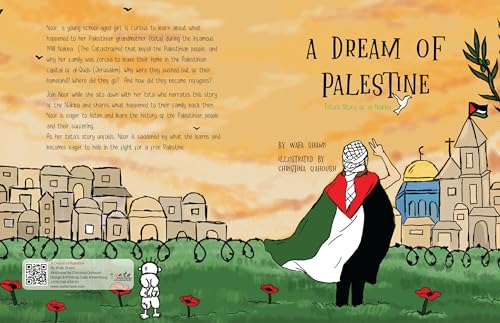
- Child-grandparent story about the 1948 Nakba
- Explains displacement and refugee history in simple terms
- Short 46-page format for guided reading
Best For: Families wanting a gentle historical introduction with adult guidance
Home-and-Identity Pick

- Picture book about a child searching for Palestine on a map
- Explores home, diaspora, and family memory
- Includes back matter with terms and historical context
Best For: Caregivers seeking a gentle story about belonging and identity
Early Literacy Pick
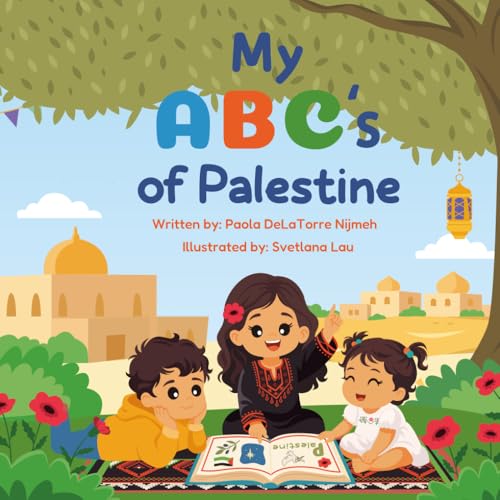
- Bilingual Arabic-English alphabet book
- Designed for ages 2–6 with bright illustrations
- Includes glossary and educator notes
Best For: Toddlers and preschoolers learning letters and heritage
Hopeful Family Memoir

- 32-page picture book for ages 3–8
- Semi-autobiographical family history in Palestine
- Hopeful message for the next generation
Best For: Young children and families wanting a gentle introduction to Palestinian family history
Superhero Storybook

- 24-page picture book with a superhero premise
- Follows a Palestinian superhero with a magical eye
- Shares the power with other children
Best For: Families seeking a playful, imaginative Palestinian story for young kids
Middle-Grade History
Displacement and the Palestinian American Story

- 192 pages for ages 10 and up
- Tells the Palestinian perspective on displacement and America
- Includes themes of olive groves, resistance, and return
Best For: Older children who need a longer, more detailed Palestinian American history book
Visual country intro for young readers
My First Book: Palestine for Kids

- Real-life images support learning
- Covers culture, landmarks, food, and more
- Simple text for early readers
Best For: Young children needing a visual introduction to Palestine
Memoir for older middle-grade readers
Tasting the Sky: A Palestinian Childhood

- Real childhood memoir set in Ramallah
- Award-winning, vivid prose
- Best for ages 11-15
Best For: Older kids who can handle a reflective memoir about Palestinian childhood
Interactive culture-and-learning workbook
Palestine Activity Book for Kids
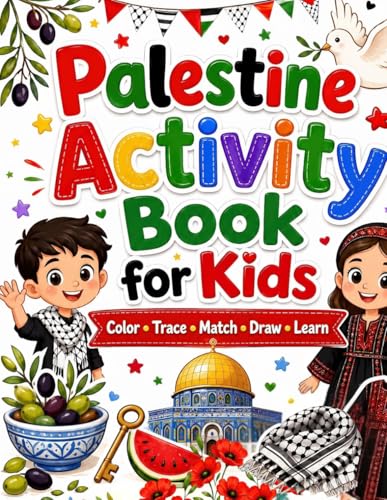
- Coloring, tracing, and word games
- Teaches symbols, foods, and landmarks
- Designed for ages 6-10
Best For: Children who learn best through hands-on activities and coloring
Heritage & Culture Pick – We Are Palestinian
If you’re looking for palestinian childrens books that celebrate identity and tradition, We Are Palestinian is a strong nonfiction choice. It introduces young readers to Palestinian food, music, literature, symbols, cities, religion, and daily life through accessible spreads and vivid illustrations, making it useful for both home reading and classroom sharing.
Best For: Parents, educators, and caregivers who want a visually rich introduction to Palestinian culture for children ages 6+.
Pros:
- Covers a wide range of Palestinian heritage topics, from tatreez embroidery to dabke and knafeh.
- Written in an accessible, child-friendly nonfiction style with memorable quotes and anecdotes.
- Beautifully illustrated by Noha Eilouti, adding strong visual appeal.
- Backed by award recognition and designed for curious young readers.
Cons:
- Reading age skews older than many picture books, at 6+ years.
- As a culture-and-history title, it is less story-driven than fiction options.
Overall, this is a polished pick if you want a broad, celebratory overview of Palestinian heritage in an engaging format. It works especially well when you want a book that can grow with a child’s curiosity.
Nakba Story Choice – A Dream of Palestine : Teta’s Story of al-Nakba
For readers seeking palestinian childrens books with a historical and emotional focus, A Dream of Palestine : Teta’s Story of al-Nakba explains the 1948 Nakba through a child’s conversation with her grandmother. The story follows Noor as she learns why her family left al-Quds and how that history shaped their lives as refugees, making it a direct way to introduce complex family history to children.
Best For: Families and older children who want a gentle, story-based introduction to the Nakba and Palestinian history.
Pros:
- Frames history through a child-grandparent conversation, which can feel approachable for young readers.
- Addresses the Nakba, displacement, and refugee experience directly.
- Short length makes it manageable for a read-aloud or guided discussion.
Cons:
- Its subject matter is heavy and may require adult support.
- Limited to a specific historical event rather than a broad cultural survey.
This is a meaningful choice if you want a children’s book that goes beyond general heritage and helps explain a pivotal moment in Palestinian history. It’s best used in settings where discussion and context are welcome.
Home-and-Identity Pick – A Map for Falasteen
A Map for Falasteen: A Palestinian Child’s Search for Home is a thoughtful option in palestinian childrens books for kids who need a story about belonging and identity. When Falasteen can’t find Palestine on a map at school, she turns to her family’s stories and learns to understand her homeland through memory, resilience, and family perspective rather than a classroom atlas.
Best For: Children and caregivers looking for a gentle picture book about diaspora, home, and cultural identity.
Pros:
- Uses a relatable school assignment to introduce a bigger conversation about Palestine.
- Includes inspiring illustrations and thoughtful back matter with key terms and historical moments.
- Balances emotion and accessibility, making it easy to share with young readers.
Cons:
- Less focused on broad cultural details than some other titles.
- The emotional premise may prompt follow-up questions from children.
This book stands out for turning a simple classroom moment into a deeper discussion about identity and home. If you want a gentle but meaningful picture book, it’s one of the most practical choices here.
Early Literacy Pick – My ABC's of Palestine
If you want palestinian childrens books for toddlers or preschoolers, My ABC’s of Palestine offers a simple bilingual entry point. This Arabic-English alphabet book uses bright illustrations, playful rhymes, and culturally rooted vocabulary to help children learn letters while connecting with Palestinian family life, food, and traditions.
Best For: Ages 2–6, bilingual families, and early learners who benefit from alphabet-based cultural books.
Pros:
- Bilingual Arabic-English format supports early language learning.
- Alphabet structure makes it easy to use with toddlers and preschoolers.
- Includes cultural vocabulary, glossary, and educator notes for added learning.
- Full-color illustrations help keep young children engaged.
Cons:
- Publication date is listed for 2026, so availability may be limited.
- Best suited to early learners rather than older kids looking for a longer story.
As an early literacy title, this book is practical, approachable, and built for repeated reading. It’s a solid pick when you want an age-appropriate way to introduce language and heritage together.
Hopeful Family Memoir – A Palestinian Story
If you’re looking for palestinian childrens books that introduce family history in a gentle, hopeful way, A Palestinian Story offers a simple entry point. This 32-page picture book presents a semi-autobiographical account of the author’s family history in Palestine and carries a message aimed at the next generation.
Best For: Families and caregivers seeking a short, hopeful introduction to Palestinian family history for ages 3–8.
Pros:
- Short 32-page format is well suited to young children.
- Written for ages 3–8, making it accessible for early readers and read-aloud time.
- Centers family history and a hopeful message for the next generation.
- Uses an English text, which may be helpful for home or classroom sharing.
Cons:
- Focused on family history rather than a broader overview of Palestine.
- May be too brief for readers wanting a more detailed historical treatment.
Overall, this is a compact, child-friendly option if you want palestinian childrens books that emphasize memory, family, and hope. Its simplicity makes it easy to share with younger kids without overwhelming them.
Superhero Storybook – My Name Is Palestine
For shoppers browsing palestinian childrens books with a more imaginative, superhero-style hook, My Name Is Palestine offers a playful approach. The 24-page book follows a Palestinian superhero with a magical eye who sees a Free Palestine and discovers a way to share that power with other children.
Best For: Parents and gift buyers who want a short, imaginative story centered on a Palestinian superhero for young readers.
Pros:
- Compact 24-page format is easy for quick read-aloud sessions.
- Superhero concept adds a whimsical, child-friendly angle.
- Described as following a Palestinian superhero with a magical eye.
- English-language text keeps it accessible for many families.
Cons:
- Very short length means limited room for deeper detail.
- Focuses on a fantasy premise rather than a broad historical account.
As a picture-book option, this title is best when you want a lively, symbolic story rather than a longer informational read. It stands out among palestinian childrens books for its superhero framing and simple, memorable premise.
Middle-Grade History – Displacement and the Palestinian American Story
If you want palestinian childrens books for older readers, Displacement and the Palestinian American Story is the most in-depth option here. This 192-page book, for ages 10 and up, presents the Palestinian perspective on historic Palestine, displacement, and the refugee experience in America.
Best For: Upper elementary and middle-grade readers ready for a longer, more detailed Palestinian American history book.
Pros:
- Longest book in this roundup at 192 pages.
- Reading age of 10 and up makes it suitable for older children.
- Focuses on the Palestinian American story and displacement from historic Palestine.
- Includes themes mentioned in the notes such as olive groves, music as resistance, and hope of return.
Cons:
- Less suitable for very young children because of length and subject depth.
- Publication date is listed for 2026, so availability may vary.
This is the strongest pick if you need a more substantial, age-appropriate history book rather than a picture-book introduction. It broadens the category of palestinian childrens books into a longer format that can support discussion with older kids.
Visual country intro for young readers – My First Book: Palestine for Kids
My First Book - Palestine: All About Palestine For Kids (My First Book - World Edition)
Check Price On AmazonIf you want Palestinian childrens books that introduce the country in a simple, visual way, this title is built for early learning. It uses real-life images and easy-to-understand text to help kids explore Palestine’s culture, landmarks, food, climate, music, sports, and demographics without feeling overwhelming.
Best For: Early readers and younger kids who learn best through pictures and bite-sized facts.
Pros:
- Uses real-life images to support visual learning.
- Covers a wide range of child-friendly topics about Palestine.
- Written in an easy reading style for young learners.
Cons:
- At 41 pages, it is a fairly brief introduction.
- Best suited to broad overview learning rather than deep history.
This is a practical pick if you want a friendly, approachable first book on Palestine for kids. It works well as a starter resource for home reading or classroom discussion.
Memoir for older middle-grade readers – Tasting the Sky: A Palestinian Childhood
Among Palestinian childrens books for older readers, this memoir stands out for its powerful first-person view of childhood during the aftermath of the 1967 Six-Day War. It follows Ibtisam Barakat’s memories of fear, separation, and finding refuge in language, making it a strong choice for readers ready for a more reflective and emotionally layered book.
Best For: Ages 11-15 who are ready for an honest memoir with historical context.
Pros:
- Grounded in a real Palestinian childhood experience.
- Offers vivid, award-winning prose.
- Suitable for older kids and middle-grade readers.
Cons:
- Heavier themes may be intense for younger children.
- More memoir than picture-based children’s book.
This is a thoughtful pick when you want a meaningful read that blends lived experience, memory, and historical perspective. It is especially useful for families and educators looking for a more substantial book for older kids.
Interactive culture-and-learning workbook – Palestine Activity Book for Kids
If you’re shopping for Palestinian childrens books that lean into interactive learning, this activity book is a cheerful option. It combines coloring pages, alphabet tracing, word games, drawing prompts, and cultural symbols to help children learn about Palestinian identity in a hands-on format.
Best For: Kids ages 6-10 who enjoy coloring, tracing, and activity-based learning.
Pros:
- Includes a mix of coloring, tracing, matching, and word activities.
- Highlights Palestinian symbols, foods, landmarks, and traditions.
- Designed for home, classroom, homeschool, and quiet creative time.
Cons:
- More activity-focused than story-driven.
- May not suit children looking for a traditional read-aloud book.
This is a strong pick if you want a lively, educational workbook-style resource rather than a narrative title. It’s especially useful for families or teachers who want cultural learning with built-in engagement.
How We Picked These Palestinian Childrens Books
We selected books based on age fit, clarity of storytelling, cultural authenticity, educational value, and overall usefulness for home, classroom, or library reading. The goal was to include a balanced mix of picture books, nonfiction introductions, family-centered stories, and interactive formats so buyers can match the book to the child’s interests and reading level.
We also looked for titles that support respectful conversation. The strongest Palestinian Childrens Books do more than introduce facts; they help children understand heritage, daily life, memory, language, and belonging in ways that feel approachable rather than overwhelming.
Quick Comparison
For younger children, alphabet books, simple introductions, and activity-based titles are usually the easiest entry point. Families looking for story-driven reading may prefer picture books centered on home, tradition, or family perspective. Older children and sensitive readers may benefit from books that connect personal experience with broader historical context. If you want a book for repeat reading, choose a title with strong illustrations, short text, or interactive prompts.
Key Buying Factors for Palestinian Childrens Books
Age and Reading Level
Match the book to the child’s attention span and comprehension. Preschool and early elementary readers often do best with visual storytelling, while middle-grade readers may be ready for more history, memoir, or layered themes.
Purpose: Education, Identity, or Conversation
Some books are best for teaching vocabulary and culture, while others are better for opening discussions about family, memory, and home. Decide whether you want an introduction, a story, or a book that encourages questions.
Format and Engagement
Picture books, alphabet books, and activity books can make Palestinian Childrens Books more interactive and repeatable. If the child enjoys hands-on learning, a coloring or puzzle format may be the best fit.
Historical and Cultural Sensitivity
Choose titles that present culture and history with care. Look for books that feel respectful, specific, and child-centered rather than overly abstract or overly simplified.
Who Should Buy Which Palestinian Childrens Books?
Parents of younger kids should start with picture books, alphabet books, or activity books for easier engagement. Teachers and librarians may want a mix of introductory nonfiction and story-based titles to support classroom discussion and displays. Families seeking identity-affirming reading can prioritize books centered on home, heritage, and naming. For older children or thoughtful read-alouds, choose books that connect personal narrative with broader lived experience.
If you’re building a small starter library, a strong approach is to pair one accessible intro title, one cultural storybook, and one interactive book. That combination gives children different ways to connect with Palestinian Childrens Books over time.