Choosing a Palestinian history textbook means finding more than a timeline—it means getting a reliable, readable account of politics, displacement, identity, and lived experience.
This roundup highlights ten strong options for readers who want historical depth, balanced context, and accessible writing in 2026.
Best 10 Palestinian History Textbook Picks for 2026
Foundational History
The Palestinian People: A History
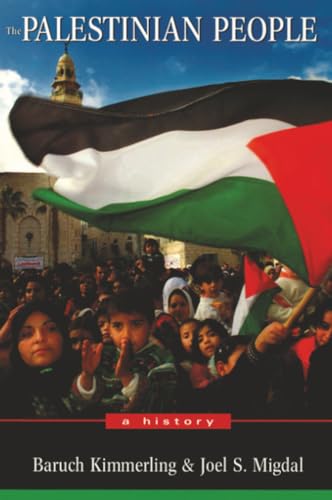
- Covers modern Palestinian history from 1834 to the Oslo era
- Academic, balanced approach to identity and statehood
- Long-form 608-page study for serious readers
Best For: Readers who want a detailed academic overview of Palestinian nationhood
Introductory Profile
Palestinians (Major Muslim Nations)

- Short, accessible overview of Palestinian society and history
- Covers geography, politics, religion, and major cities
- Good starting point for younger or casual readers
Best For: Students and general readers who want an easy introduction
Personal Source
A Young Palestinian's Diary, 1941–1945

- Primary-source diary from the British Mandate years
- Shows daily life alongside political change
- Includes editorial context and biographical detail
Best For: Readers interested in lived experience and documentary history
Narrative Collection

- Blends stories, photos, poetry, and art
- Includes a historical introduction and 150-year timeline
- Centers Palestinian and Jewish voices and experiences
Best For: Readers who want history through narrative and cultural expression
Memoir & Conflict Insight
Once Upon a Country: A Palestinian Life

- Personal account of displacement and politics
- Written by a Palestinian scholar and activist
- Substantial 596-page memoir with strong reviews
Best For: Readers seeking a first-person, historically informed perspective
Comprehensive Survey
Palestine and the Palestinians: A Social and Political History

- Sweeping history from antiquity to the Road Map to Peace
- Thoroughly revised second edition
- Includes new chapters on major current issues
Best For: Readers wanting an updated, broad historical overview
Origins & Early Conflict
Land, Labor and the Origins of the Israeli-Palestinian Conflict, 1882-1914

- Focused study of 1882-1914
- Analyzes land and labor in the early conflict
- Updated edition from University of California Press
Best For: Readers studying the conflict’s early roots
Memoir & Family Perspective
We Could Have Been Friends, My Father and I

- Finalist for major book prizes
- Personal Palestinian human-rights memoir
- Short, readable 160-page format
Best For: Readers who want a concise, personal account of Palestinian political history.
Dialogue & Conflict Perspective
Letters to My Palestinian Neighbor

- New York Times bestseller
- Explains the conflict through Israeli eyes
- Includes Palestinian response letters
Best For: Readers who want a balanced-feeling conversation starter on the conflict and peace.
Peace Plan & Independence Focus

- Focuses on the 1988 Declaration of Independence
- Emphasizes Palestinian agency in peace efforts
- Combines history with a concrete proposal
Best For: Readers interested in Palestinian political strategy, independence, and peace proposals.
Foundational History – The Palestinian People: A History
If you want a serious Palestinian history textbook that traces modern Palestinian identity from the 1834 Arab revolt through the British Mandate, Zionism, the founding of Israel, and the Oslo process, this is a strong scholarly pick. It focuses on how Palestinians struggled to form themselves as a people while navigating war, displacement, political institutions, and the search for coexistence.
Best For: Readers who want a detailed, academic overview of Palestinian nationhood and modern political history.
Pros:
- Authoritative, balanced account from modern origins through Oslo and beyond
- Explains how key historical events shaped Palestinian identity and politics
- Offers thoughtful analysis of what went right and wrong in the peace process
- Substantial 608-page depth for serious study
Cons:
- Dense and academic rather than introductory
- Focuses on history and politics more than personal narrative
- Best suited to readers willing to commit to a long, detailed read
As a textbook-style history, this volume is especially useful if you want context, chronology, and interpretation in one place. It is a strong choice for readers looking for a measured, research-driven account rather than a quick overview.
Introductory Profile – Palestinians (Major Muslim Nations)
For a younger reader or anyone needing a compact Palestinian history textbook, this volume gives a broad overview of the Palestinians as a people and nation. It covers geography, history, economy, government, religion, foreign relations, and major cities, while placing the 1948 partition plan and the 1967 war at the center of the modern conflict.
Best For: Students and general readers who want a short, accessible introduction to Palestinian history and society.
Pros:
- Concise overview across multiple topics: history, culture, politics, and geography
- Easy-to-read format with accessible language and short length
- Explains major turning points such as 1948 and 1967
- Suitable for younger readers, with a reading age listed at 6+
Cons:
- Too brief for deep historical study
- More survey-like than analytical
- Better as an introduction than a full textbook replacement
This is a practical pick if you need a fast, broad-strokes primer instead of a heavy academic history. It works best as an entry point for readers who want a simple framework before moving to more detailed sources.
Personal Source – A Young Palestinian's Diary, 1941–1945
If you want a Palestinian history textbook with a more intimate, primary-source feel, this diary is a distinctive choice. Set during the final years of the British Mandate, it captures daily life, family concerns, and political change in Palestine through the reflections of Sami ‘Amr of Hebron.
Best For: Readers interested in lived experience, primary-source history, and the social texture of Palestine in the 1940s.
Pros:
- Rare translated diary from a young Palestinian during a pivotal era
- Combines personal reflections with historical context
- Offers detail on daily life, relationships, and social change
- Includes contextual notes and biographical framing from the editor
Cons:
- Narrower in scope than a full historical survey
- More personal and episodic than structured textbook narration
- Best for readers comfortable with documentary-style material
This book stands out because it brings history down to the level of one person’s experiences during a turbulent period. It is a strong companion volume if you want context that feels immediate, human, and grounded in the era itself.
Narrative Collection – A Land With a People
This is a different kind of Palestinian history textbook: part anthology, part historical introduction, and part cultural response to Zionism. It combines stories, photographs, poetry, and art with a detailed historical introduction and timeline covering 150 years of Palestinian and Jewish resistance to Zionism.
Best For: Readers who want history presented through personal stories, art, and political reflection.
Pros:
- Mixes narrative, poetry, photography, and art with historical framing
- Includes voices from Palestinians and Jews with varied identities and perspectives
- Features a detailed introduction and 150-year timeline
- Offers a reflective, human-centered way to approach the subject
Cons:
- Less traditional than a standard textbook
- More interpretive and literary than strictly academic
- Best for readers open to a collection format rather than a single narrative
If you want a book that broadens the discussion beyond conventional history writing, this one delivers a layered and emotionally engaging perspective. It is especially useful for readers who want context plus voices, not just chronology.
Memoir & Conflict Insight – Once Upon a Country: A Palestinian Life
If you want a Palestinian history textbook alternative that feels grounded in lived experience, this memoir offers a deeply personal view of the conflict. Sari Nusseibeh writes as a teacher, scholar, philosopher, and eyewitness, tracing displacement, politics, and daily life with unusual clarity and compassion.
Best For: Readers who want an intelligent, first-person account of Palestinian life and the Israeli-Palestinian conflict.
Pros:
- Written by a prominent Palestinian intellectual and peace activist
- Provides rare depth, compassion, and personal context
- Strong critical praise, including from major reviews
- Long, substantial memoir at 596 pages
Cons:
- Memoir format, so it is not a formal textbook or survey history
- Focuses on one individual’s life and perspective
This is a strong choice if you want context that feels human and historically informed rather than purely academic. It is especially useful for readers who value firsthand perspective alongside political and social reflection.
Comprehensive Survey – Palestine and the Palestinians: A Social and Political History
For shoppers looking for a Palestinian history textbook with broad coverage, this revised second edition is the most textbook-like option in the group. It presents a sweeping social, economic, ideological, and political history of the Palestinian people from antiquity through the Road Map to Peace, with updated chapters on major modern issues.
Best For: Readers who want a broad, updated historical overview of Palestine and the Palestinians.
Pros:
- Covers history from antiquity to the Road Map to Peace
- Second edition with thoroughly revised, updated content
- Includes new chapters on key current issues
- Broad social, economic, ideological, and political scope
Cons:
- At 487 pages, it is still a substantial academic read
- Best suited to readers comfortable with a history-heavy, analytical approach
This is the strongest match if your goal is a serious overview rather than a memoir or narrowly focused study. Its updated chapters make it especially useful for readers who want a modern reference point.
Origins & Early Conflict – Land, Labor and the Origins of the Israeli-Palestinian Conflict, 1882-1914
Land, Labor and the Origins of the Israeli-Palestinian Conflict, 1882-1914, Updated Edition
Check Price On AmazonIf you need a Palestinian history textbook focused on the roots of the conflict, this book offers a targeted academic study of the early Zionist enterprise and the struggle over land and labor. Gershon Shafir examines how local conflict between European settlers and the Palestinian Arab population shaped the emerging state, making it useful for readers who want origins rather than a broad survey.
Best For: Readers focused on the early historical origins of the Israeli-Palestinian conflict.
Pros:
- Focuses specifically on 1882-1914, the formative period of the conflict
- Challenges heroic myths about the foundation of the State of Israel
- Examines land and labor as central historical forces
- Updated edition from a University of California Press title
Cons:
- Very specific scope, not a full-history overview
- Older publication date than the other options
This is the best pick for readers who want a focused, scholarly look at the conflict’s early roots. It pairs well with a broader history book if you want both background and context.
Memoir & Family Perspective – We Could Have Been Friends, My Father and I
If you want a Palestinian history textbook alternative that feels personal and lived-in, this memoir offers a focused view of twentieth-century struggles through one father-son relationship. Raja Shehadeh traces his father Aziz Shehadeh’s work as a lawyer, activist, and political detainee under British, Jordanian, and Israeli rule, making it a strong choice for readers who want history anchored in family experience.
Best For: Readers who want a concise, personal account of Palestinian political history and human rights struggles.
Pros:
- Finalist for the National Book Award and Los Angeles Times Book Prize
- Centers Palestinian human rights struggles through a deeply personal memoir
- Shows how political conflict shaped one family across multiple regimes
- Short 160-page length makes it approachable
Cons:
- More memoir than broad historical survey
- Focuses on one family’s experience rather than comprehensive background
The book is most useful if you want a reflective, human-scale entry point rather than a dense reference work. Its value comes from the emotional and political insight it draws from a specific Palestinian life.
Dialogue & Conflict Perspective – Letters to My Palestinian Neighbor
For readers seeking a Palestinian history textbook from a conflict-and-peace angle, this book offers an Israeli author’s direct attempt to explain the dispute through Israeli eyes. It is practical if you want a readable introduction to the emotional and ideological arguments around the Israeli-Palestinian conflict, especially with its added epilogue that gives Palestinian readers space to respond.
Best For: Readers who want a balanced-feeling conversation starter on the conflict and the possibility of peace.
Pros:
- New York Times bestseller with strong critical praise
- Written as direct letters to Palestinian neighbors for an accessible format
- Explores the Israeli narrative, Zionism, and the path to a two-state solution
- Includes a new epilogue with Palestinian responses
Cons:
- Primarily presents the conflict through Israeli eyes
- More interpretive and reflective than textbook-like
This is a good pick if you want perspective, not just chronology. Its strength is in explaining how one side frames the conflict while opening space for dialogue.
Peace Plan & Independence Focus – Olive Branch from Palestine
If you need a Palestinian history textbook that emphasizes political strategy and agency, this book is built around the 1988 Palestinian Declaration of Independence and what it meant for Palestinian nationalism. Jerome Segal combines historical analysis with a detailed proposal for ending the conflict, making it especially useful for readers who want history tied to policy ideas.
Best For: Readers interested in Palestinian political strategy, independence, and peace proposals.
Pros:
- Examines the 1988 Palestinian Declaration of Independence in depth
- Highlights Palestinian agency in shaping a two-state path
- Includes a detailed end-of-claims/end-of-conflict proposal
- Grounded in historical and analytical discussion
Cons:
- More policy-oriented than a general history overview
- Likely best for readers already interested in the peace process
Compared with a standard historical overview, this book is narrower but more action-oriented. It works best if you want to understand how Palestinian independence efforts connect to modern peace planning.
How We Picked the Best Palestinian History Textbook
We focused on books that offer credible historical framing, strong author credentials, and lasting value for readers who want a serious Palestinian History Textbook or a closely related companion read. Priority went to works that are well-regarded for clarity, scope, and usefulness across student, classroom, and self-study settings.
Quick Comparison
Some titles lean toward broad historical surveys, while others focus on memoir, political history, or the origins of the conflict. If you want a single foundational volume, choose a wide-ranging history. If you want personal perspective, pick a memoir or diary. If you need background on the conflict’s early roots, choose a more specialized historical study.
Key Buying Factors for a Palestinian History Textbook
Scope and Time Period
Decide whether you need a general overview of Palestinian history or a narrower study of a specific era, such as the late Ottoman period, the British Mandate, or the modern conflict. A broader Palestinian History Textbook is better for first-time readers; a focused title is better for deeper research.
Perspective and Approach
Some books emphasize political history, while others highlight social history, memoir, or documentary evidence. Look for an approach that matches your purpose. Students may prefer analytical overviews, while general readers may value narrative and personal testimony.
Readability
Clear prose matters, especially if you are new to the subject. The best options balance historical detail with accessible language, so the material remains usable outside of academic settings.
Academic Value
If you need a book for study or citation, prioritize works with strong sourcing, a clear structure, and a reputation for serious scholarship. These are typically better suited to essays, discussion, and reference use.
Who Should Buy Which Palestinian History Textbook?
New readers should start with a broad survey that explains the major historical developments in plain language. Students who need context for class should look for titles with stronger academic framing and source depth. Readers interested in lived experience may prefer memoirs or diaries, which add human perspective to the larger history. If you want to understand the foundations of the Israeli-Palestinian conflict, choose a book centered on land, labor, and early political change. For peace-oriented or contemporary context, a title that addresses present-day dialogue may be the better fit.
In short, the best Palestinian History Textbook is the one that matches your reading level, your research needs, and the period you most want to understand.