Palestinian poetry offers more than lyric beauty; it carries memory, resistance, grief, and enduring hope. For readers seeking voices that feel immediate and deeply human, these books open a powerful window into lived experience.
This roundup highlights a range of selections for newcomers, students, and longtime poetry readers alike, with an emphasis on quality, context, and lasting value.
Best 10 Palestinian Women Poets Books Picks for 2026
The Tent Generations: Palestinian Poems

- Anthology spanning multiple Palestinian poets and generations
- Includes Fadwa Tuqan and other voices shaped by exile
- English-language collection centered on identity and displacement
Best For: Readers who want a broad Palestinian poetry anthology with women poets included
You Must Live: New Poetry from Palestine
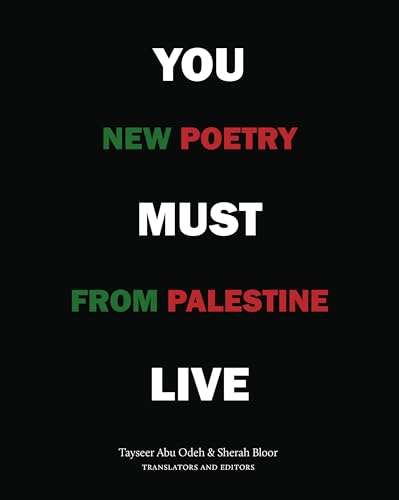
- Bilingual anthology of recent poetry from Gaza and the West Bank
- Edited and translated from Arabic for accessible reading
- Mixes urgent political witness with varied poetic styles
Best For: Readers who want a contemporary bilingual Palestinian poetry anthology
Born Palestinian, Born Black: & The Gaza Suite

- Restored single-author collection by Suheir Hammad
- Adds new poems, preface, and critical context
- Compact 95-page edition for focused reading
Best For: Readers who want a concise book by Palestinian woman poet Suheir Hammad
If I Must Die: Poetry and Prose

- Posthumous collection of poetry and prose by Refaat Alareer
- Includes the title poem that reached global attention
- Covers literature, teaching, politics, and family
Best For: Readers who want a memorial Palestinian poetry collection to pair with women poets
Things You May Find Hidden in My Ear

- Award-winning debut poetry from Gaza
- Balances siege, survival, and natural beauty
- Includes an in-depth interview with the poet
Best For: Readers wanting a Gaza-centered poetry debut with lyrical witness and resilience
Heaven Looks Like Us

- Wide anthology of Palestinian poetry and reflections
- Includes queer and feminist perspectives
- Features many established and emerging voices
Best For: Readers wanting a broad Palestinian poetry anthology with resistance and liberation themes
Don’t Forget Palestine

- Emotional poetry and reflections on Palestine
- Covers grief, justice, faith, and hope
- Compact 161-page independently published volume
Best For: Readers wanting intimate, reflective writing about Palestinian life and resilience
The Poetry of Arab Women Anthology

- PEN Oakland Literary Award winner
- Anthology of 83 Arab women poets
- Includes Fadwa Tuqan and other major voices
Best For: Readers who want a broad anthology with important Palestinian voices
Sumud: A New Palestinian Reader

- Mixes poetry, essays, memoir, and art
- Features 46 contributors and recent writing
- Centers Palestinian culture and resilience
Best For: Readers who want a contemporary Palestinian anthology with multiple genres
Falastiniyyat: A Century of Palestinian Feminisms

- Covers a century of Palestinian feminism
- Shows how activism shaped liberation struggles
- Not a poetry book, but strong context
Best For: Readers who want historical and political background on Palestinian women’s activism
Anthology Pick – The Tent Generations: Palestinian Poems
If you’re looking for palestinian women poets books with a broad historical and cultural range, The Tent Generations: Palestinian Poems is a strong anthology-style choice. It brings together Palestinian poets from different generations and backgrounds, with English-language presentation and a focus on the experience of dispossession, displacement, and homeland.
Best For: Readers who want an anthology of Palestinian poetry that includes Fadwa Tuqan and other poets shaped by exile, occupation, and diaspora.
Pros:
- Includes poets from multiple age groups and backgrounds
- Features Fadwa Tuqan among the represented poets
- Focuses on themes of Nakba, exile, refugee life, and Palestinian identity
- English-language edition with 167 pages for accessible reading
Cons:
- Not a women-only collection
- Does not include Palestinian folkloric poetry
- All poems are presented in translated/edited anthology form rather than as a single-author volume
This is a useful pick if you want context-rich Palestinian poetry in anthology form, especially when you want a book that places women poets like Fadwa Tuqan alongside a wider literary lineage.
Contemporary Bilingual Pick – You Must Live: New Poetry from Palestine
For shoppers comparing palestinian women poets books, You Must Live: New Poetry from Palestine stands out as a current bilingual anthology from Gaza and the West Bank. It collects recent poems translated from Arabic and edited by Tayseer Abu Odeh and Sherah Bloor, making it a practical choice if you want contemporary Palestinian poetry presented in English alongside the original language.
Best For: Readers who want a bilingual, contemporary anthology of recent poetry from Gaza and the West Bank.
Pros:
- Bilingual edition for reading in English and Arabic
- Gathers recent poems from Gaza and the West Bank
- Varied tones include prayerful, theatrical, humorous, and lyrical work
- Substantial 320-page collection
Cons:
- Not a women-only title
- Publication date is listed as 2025, so it may not be immediately available everywhere
- Focused on recent work rather than a historical overview
This is a strong option if you want a modern anthology with breadth of voice and a bilingual format, especially for readers who prefer contemporary Palestinian poetry over classic single-author collections.
Single-Author Classic – Born Palestinian, Born Black: & The Gaza Suite
If you’re narrowing down palestinian women poets books, Suheir Hammad’s Born Palestinian, Born Black: & The Gaza Suite is an important single-author collection to consider. This restored edition brings back her first book of poems and adds new poems, a new preface, and supporting essays, giving readers a compact but layered entry into her voice.
Best For: Readers who want a focused, single-author book by Palestinian woman poet Suheir Hammad.
Pros:
- Single-author collection by Suheir Hammad
- Restored edition with new poems and a new preface
- Includes The Gaza Suite, plus introduction, afterword, and publisher’s note
- Short 95-page format makes it easy to read in one sitting
Cons:
- Much shorter than anthology-style alternatives
- English-only edition
- Less broad in scope if you want multiple poets or a survey of Palestinian poetry
This book works well if you want a direct, author-centered introduction to Suheir Hammad and prefer a slim volume with added contextual material rather than a large anthology.
Memorial Companion – If I Must Die: Poetry and Prose
Although it is not one of the palestinian women poets books, If I Must Die: Poetry and Prose is a powerful addition for readers building a Palestinian poetry shelf. This posthumous collection gathers Refaat Alareer’s poems and prose about literature, teaching, politics, and family, including the poem that became a global sensation after his death.
Best For: Readers who want a memorial collection of Palestinian poetry and prose with strong literary and political resonance.
Pros:
- Combines poetry and prose in one volume
- Includes the widely known title poem, “If I Must Die”
- Offers writing on teaching, literature, politics, and family
- Substantial 288-page collection curated by a close collaborator
Cons:
- Not a women poet title
- More political and memorial in tone than a general poetry sampler
- May feel emotionally heavy for some readers
This is best treated as a companion pick: deeply moving, widely relevant, and valuable for readers who want a serious, human-centered Palestinian literary voice alongside women poets’ work.
Gaza Witness – Things You May Find Hidden in My Ear
If you’re looking for Palestinian women poets books-adjacent reading that deepens a shelf of contemporary Palestinian poetry, this debut by Mosab Abu Toha is a strong place to start. Written from Gaza, it pairs scenes of siege, rubble, and surveillance with moments of tea, roses, sea light, and family life, making it useful for readers who want lyric poetry grounded in lived reality.
Best For: Readers who want an award-winning Gaza-centered poetry collection that balances witness, resilience, and lyrical detail.
Pros:
- Winner of the American Book Award, the Palestine Book Award, and Arrowsmith Press’s 2023 Derek Walcott Poetry Prize
- Includes poems shaped by life under lockdown and repeated military attacks in Gaza
- Combines political urgency with natural beauty and everyday family scenes
- Includes an in-depth interview about life in Gaza and the poet’s path to writing
Cons:
- Focused specifically on Gaza, so it is narrower than a broad anthology
- Its subject matter is intense and often მძიმე with loss and destruction
This is a compact but highly praised collection for readers who want poetry that is both documentary and deeply humane. Its strongest appeal is the way it holds grief and beauty in the same frame without softening either one.
Best for Everyday Use – Heaven Looks Like Us
For shoppers building a list of Palestinian women poets books and broader Palestinian poetry, this anthology is the most expansive option here. Edited by George Abraham and Noor Hindi, it gathers established and emerging voices and explicitly includes queer and feminist perspectives, anti-colonial resistance, love, time, and protest alongside the realities of exile and violence.
Best For: Readers who want a wide-ranging Palestinian poetry anthology with resistance, feminist themes, and many voices.
Pros:
- Large anthology with 368 pages of Palestinian poetry and reflections
- Includes contributors such as Naomi Shihab Nye, Lena Khalaf Tuffaha, Hala Alyan, and Heba Abu Nada
- Brings together resistance, liberation, queer perspectives, and feminist themes
- Frames Palestinian poetry as a living “power to narrate” across generations
Cons:
- As an anthology, it offers breadth rather than one sustained voice
- Its political and historical focus may be heavier than readers seeking lighter poetry
This is the strongest pick if you want range, context, and many distinct Palestinian voices in one volume. It works especially well for readers who want poetry that is both political and future-facing.
Reflective Pick – Don’t Forget Palestine
If your search for Palestinian women poets books is really about finding intimate, reflective writing around Palestinian life, loss, and hope, this collection offers a direct and emotional entry point. Samir Shams writes in a raw, accessible style about grief, justice, love, faith, and resistance, while also emphasizing the beauty and spirit that endure through devastation.
Best For: Readers who want a compact, emotional poetry-and-reflection collection centered on grief, humanity, and hope.
Pros:
- Focuses on Palestine through themes of humanity, grief, justice, love, faith, and resistance
- Written in a raw, intimate style that is easy to approach
- Shorter 161-page format makes it a manageable read
- Highlights both pain and hope rather than only loss
Cons:
- Independently published, so it may have less editorial backing than larger press titles
- Blends poetry and reflections, which may not suit readers wanting a purely formal poetry collection
This is a good option for readers who want an emotionally direct book that emphasizes witness and perseverance. Its value lies in its clarity and heartfelt focus more than in literary prestige or breadth.
Editor’s Pick – The Poetry of Arab Women Anthology
If you’re looking for palestinian women poets books as part of a broader discovery of Arab women’s writing, this anthology is a strong place to start. It gathers 83 poets writing in Arabic, French, English, and other languages, with work by major names like Fadwa Tuqan alongside other established and emerging voices. The result is a wide-ranging introduction to a literary tradition that has often been overlooked in the West.
Best For: Readers who want a broad, well-curated anthology of Arab women poets that includes important Palestinian voices.
Pros:
- Winner of the PEN Oakland Literary Award
- Features 83 poets from across the Arab world and diaspora
- Includes Fadwa Tuqan, plus other notable poets such as Etel Adnan and Naomi Shihab Nye
- Strong supporting materials, including an introduction and poet/translators’ biographies
Cons:
- It is an anthology, so readers seeking a single-author focus may want something more specific
- Not limited to Palestinian poets alone
This is best treated as a high-value survey of Arab women’s poetry rather than a niche single-country collection. For buyers who want context, range, and literary significance in one volume, it’s an excellent choice.
Reader’s Choice – Sumud: A New Palestinian Reader
For shoppers comparing palestinian women poets books, this reader offers a wider cultural frame that still includes poetry alongside memoir, essays, fiction, art, and criticism. It draws from 46 contributors and emphasizes Palestinian culture as a form of steadfastness under occupation. If you want one book that connects poetry to lived experience, resistance, and contemporary Palestinian writing, this anthology fits that need.
Best For: Readers who want a contemporary Palestinian anthology that blends poetry with memoir, essays, and visual art.
Pros:
- Includes poetry plus memoir, stories, essays, and art
- Features 46 contributors across the 20th and 21st centuries
- Highlights writing from 2021–2024, including recent voices
- Grounded in Palestinian cultural history and resistance
Cons:
- Not a poetry-only collection
- Best suited to readers interested in broader Palestinian cultural writing
This is a strong pick if you want literary range and current political-cultural context in the same book. It’s especially useful for readers who want poetry as part of a larger portrait of Palestinian creativity and endurance.
Deep Context – Falastiniyyat: A Century of Palestinian Feminisms
If your search for palestinian women poets books is really about understanding the women’s movements and political history behind the literature, this book provides essential context. It traces Palestinian women’s organizing from 1929 to the present and argues that feminism has been central to liberation efforts all along. While it is not a poetry collection, it is highly relevant for readers who want the historical and activist background that shaped Palestinian women’s cultural work.
Best For: Readers who want historical and political context on Palestinian women’s organizing and feminist activism.
Pros:
- Recovers a century of Palestinian feminist history
- Connects women’s organizing to anticolonial struggle
- Highlights figures from the Mandate era to the present
- Offers an intersectional, antiimperial feminist perspective
Cons:
- Not a poetry book
- Publication date is listed as 2026
This is the best fit for buyers who want substance, history, and political framing rather than a literary anthology. It complements poetry-focused reading by explaining the feminist lineage and activism that helped shape Palestinian cultural expression.
How We Picked the Best Palestinian Women Poets Books
For this roundup of Palestinian Women Poets Books, we prioritized editorial quality, cultural significance, readability, and range. We looked for books that represent different poetic styles, historical moments, and entry points for readers who want both beauty and substance. We also favored titles that can work as standalone purchases or as additions to a broader poetry collection.
Quick Comparison
Some books in this list are slim, highly focused collections that suit readers who want a concentrated emotional experience. Others are anthologies or readers that offer broader historical and thematic coverage. If you want a single poet’s voice, choose a more intimate collection. If you want context and variety, an anthology or reader may be the better fit.
Key Buying Factors for Palestinian Women Poets Books
Scope
Decide whether you want one poet’s body of work, a themed collection, or a multi-author anthology. Scope affects both depth and reading experience.
Theme and Tone
These books may center on exile, homeland, family, mourning, feminism, or political witness. Pick the tone that best matches your reading goal, whether reflective, urgent, scholarly, or celebratory.
Translation and Editorial Framing
Because many readers will encounter these poems in translation, note the presence of translators, editors, introductions, and notes. Strong editorial framing can make Palestinian Women Poets Books more accessible and meaningful.
Format and Use Case
Consider whether the book is for personal reading, classroom use, gifting, or reference. Paperback anthologies and readers may offer the best value for students, while focused collections can be ideal for readers who want a more immersive experience.
Who Should Buy Which Palestinian Women Poets Books?
New readers should start with a broad anthology or reader to get historical and stylistic range. Poetry fans looking for emotional intensity may prefer shorter, more concentrated collections. Readers interested in feminism, identity, and cultural history should lean toward books with stronger critical or thematic framing. If you are buying a gift, choose a title with accessible language and a clear emotional arc. For deeper study, a multi-author collection can help connect individual voices to the wider tradition.
In the end, the best choice depends on whether you want a single unforgettable voice, a wide survey, or a book that helps you understand the larger literary and political context surrounding Palestinian Women Poets Books.