Contemporary Palestinian literature offers powerful perspectives on displacement, belonging, family, resistance, and cultural survival. Whether you want poetry, memoir, criticism, or fiction, the right book can open a vivid window into lived experience.
This roundup highlights 10 carefully selected titles for readers who want depth, context, and literary quality in 2026.
Best 10 Contemporary Palestinian Literature Picks for 2026
Anthology of Modern Palestinian Literature

- 740-page revised anthology in English translation
- Presents a broad Palestinian world view
- Strong fit for serious interest in contemporary Arab culture
Best For: Readers who want a deep, accessible overview of modern Palestinian writing
Being There, Being Here

- Studies Palestinian writing across many languages
- Focuses on diaspora and global identity
- Based on eight years of research
Best For: Readers curious about multilingual Palestinian literature and diaspora writing
The Palestinian Wedding

- English and Arabic text presented together
- Anthology format centered on contemporary poetry
- Compact 249-page edition
Best For: Readers who want a bilingual Palestinian poetry anthology
We Could Have Been Friends, My Father and I

- Finalist for major literary prizes
- Short memoir tied to Palestinian human rights history
- Personal father-son portrait with political context
Best For: Readers who want an acclaimed Palestinian memoir with historical depth
In the Wake of the Poetic: Palestinian Artists After Darwish

- Tracks Darwish’s influence on newer Palestinian artists
- Covers poetry, performance, visual art, and music
- Focuses on aesthetics, politics, and identity
Best For: Readers who want an academic view of Palestinian literature’s wider artistic influence
After the Last Sky: Palestinian Lives

- Sees Palestinian life through exile and identity
- Links personal memory with larger political realities
- A concise and influential portrait of displacement
Best For: Readers who want a classic, reflective work on Palestinian identity
A Movement's Promise: The Making of Contemporary Palestinian Theater

- Traces Palestinian theater from the 1970s onward
- Shows how performance supported cultural resistance
- Covers censorship, identity, and artistic agency
Best For: Readers interested in Palestinian theater as cultural history and resistance
Palestinian Walks: Forays into a Vanishing Landscape

- Lyrical account of walks in the West Bank
- Tracks changing hills, trails, and villages over time
- Blends memoir with political and historical observation
Best For: Readers seeking reflective, place-based Palestinian writing
Unlocking the Palestinian-Israeli Negotiations

- Critical review of negotiation literature and methods
- Short academic format at 77 pages
- Useful for political science and conflict resolution readers
Best For: Researchers and students seeking a concise scholarly overview
The Secrets of Solomon's Seal
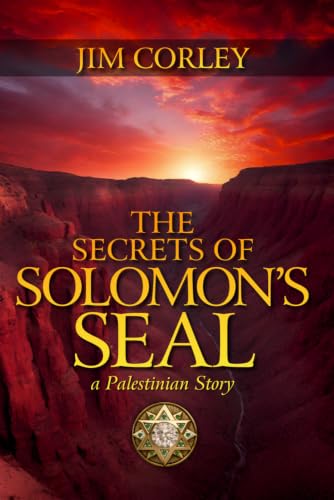
- Archaeological thriller with a Palestinian journalist lead
- Features cross-border pursuit and an uneasy alliance
- Explores forgiveness, history, and reconciliation
Best For: Readers wanting a suspenseful Palestinian-led genre novel
Essential Anthology – Anthology of Modern Palestinian Literature
If you want a serious entry point into contemporary Palestinian literature, this revised anthology is built for breadth and depth. With 740 pages of English translations, it gathers a wide range of voices that reflect a Palestinian world view marked by intensity, paradox, aspiration, and eloquence.
Best For: Readers seeking a substantial, translation-based overview of modern Palestinian writing and culture.
Pros:
- Large, 740-page collection offers substantial reading value.
- English translation makes it accessible to non-Arabic readers.
- Useful for anyone with serious interest in contemporary Arab culture.
- Revised edition from Columbia University Press adds credibility.
Cons:
- Its size and scope may feel overwhelming for casual readers.
- Focused on anthology format rather than a single authorial voice.
This is the strongest pick if you want a foundational reference rather than a quick read. It works especially well for readers who want a wide, curated view of Palestinian literary expression in translation.
Global Palestinian Voices – Being There, Being Here
For readers tracking contemporary Palestinian literature beyond Arabic alone, this book offers a timely lens on multilingual and diasporic writing. It examines how Palestinian stories are now being shaped in Spanish, Italian, English, Danish, Hebrew, and other languages across the world.
Best For: Readers interested in diaspora, translation, and the global spread of Palestinian cultural expression.
Pros:
- Explores Palestinian writing across multiple languages and regions.
- Draws on an eight-year research journey.
- Useful for understanding how Palestinian identity is being imagined globally.
- Highlights both local and international literary contexts.
Cons:
- More analytical than a traditional fiction or poetry collection.
- May appeal more to readers interested in literary context than narrative storytelling.
This is a strong choice if you want a book that explains where Palestinian writing is headed across languages and communities. It adds important context for readers who care about how home, nation, and literature intersect today.
Bilingual Poetry Pick – The Palestinian Wedding
If you’re shopping for contemporary Palestinian literature with a poetry focus, this bilingual anthology is an appealing option. It presents English and Arabic side by side, making it useful for readers who want to experience the poems in both languages.
Best For: Readers who want a bilingual contemporary Palestinian poetry collection.
Pros:
- Bilingual format includes both English and Arabic.
- Anthology format offers a curated poetry selection.
- Compact 249-page edition is easier to manage than larger collections.
- Strong choice for readers comparing translation and original text.
Cons:
- Poetry-focused format may not suit readers seeking prose or criticism.
- Edition details suggest an older publication rather than a recent release.
This book stands out for readers who want direct engagement with Palestinian poetry in two languages. It’s especially practical if you value side-by-side reading and a more focused anthology format.
Memoir and Memory – We Could Have Been Friends, My Father and I
For readers who want contemporary Palestinian literature with a personal, reflective angle, this memoir offers a compact but powerful option. Raja Shehadeh traces his relationship with his father alongside the long struggle for Palestinian human rights, giving the book both intimate and historical weight.
Best For: Readers looking for a short, award-recognized Palestinian memoir with political and family history.
Pros:
- Finalist for the National Book Award and Los Angeles Times Book Prize.
- Blends memoir with Palestinian political history.
- Short 160-page length makes it approachable.
- Offers a nuanced portrait of father-son relationships.
Cons:
- Not a poetry or fiction collection.
- Its reflective style may be less suited to readers seeking broad anthology coverage.
This is a compelling pick if you want contemporary Palestinian literature that is personal, literary, and historically grounded. Its brevity and acclaim make it easy to recommend for readers who prefer memoir with substance.
Critical Lens – In the Wake of the Poetic: Palestinian Artists After Darwish
If you’re exploring contemporary palestinian literature and its wider cultural reach, this book is a strong choice because it looks at how Mahmoud Darwish and later Palestinian writers shaped newer artistic forms. It focuses on the last two decades and connects poetry to performance art, visual art, spoken word, and music, making it useful for readers who want a broader view of Palestinian cultural expression.
Best For: Readers interested in how Palestinian literature influences contemporary art, identity, and transnational cultural expression.
Pros:
- Examines the influence of Darwish on a new generation of artists and writers
- Connects poetry with performance, visual art, spoken word, and music
- Offers a focused look at aesthetics, politics, loss, and belonging
- Highlights key artists such as Suheir Hammad, Ghassan Zaqtan, and Mona Hatoum
Cons:
- More academic than a casual literary overview
- Centered on cultural theory and analysis rather than a broad anthology
This is a valuable pick if you want a serious, interpretive study of how contemporary Palestinian creativity has evolved beyond the page. It is especially useful for readers who want context around the artistic afterlife of Darwish’s poetry.
Essential Classic – After the Last Sky: Palestinian Lives
For readers exploring contemporary palestinian literature through the lens of identity and exile, this book remains an essential reference point. It offers a searing portrait of Palestinian life while also reflecting on Edward Said’s unclaimable past, making it a concise but powerful choice for anyone wanting a literary and personal account shaped by displacement.
Best For: Readers seeking a classic, reflective portrait of Palestinian identity and exile.
Pros:
- Frames Palestinian life through a powerful portrait of identity and exile
- Connects the personal with broader questions of belonging and memory
- Short, focused description suggests an accessible entry into the subject
Cons:
- Supply notes give limited detail about structure and scope
- May feel more reflective than comprehensive for readers wanting broad coverage
This is a strong pick if you want a succinct, emotionally resonant work that sits near the center of Palestinian literary discourse. It suits readers who value interpretation, memoir-like insight, and the relationship between place, memory, and identity.
Theater History Pick – A Movement's Promise: The Making of Contemporary Palestinian Theater
If your interest in contemporary palestinian literature extends to performance and cultural history, this book offers a detailed account of how Palestinian theater developed from the 1970s onward. It shows how theater became a major form of artistic expression in the absence of local media and how artists used it to articulate identity, critique social norms, and resist censorship.
Best For: Readers who want a history of Palestinian theater as a cultural and political form of expression.
Pros:
- First history of the Palestinian Theater Movement, according to the notes
- Explains how theater served as a leading artistic outlet in the 1970s and beyond
- Highlights artists’ struggles against censorship and permission barriers
- Connects performance to identity, cultural values, and resistance
Cons:
- Focused on theater rather than poetry or fiction
- Publication date is 2025, so availability may matter to buyers
This is the best fit if you want a grounded historical study rather than a general literary survey. It adds important context to contemporary Palestinian cultural production by showing how performance became a site of both creativity and conflict.
Literary Memoir of Place – Palestinian Walks: Forays into a Vanishing Landscape
If you’re exploring contemporary Palestinian literature, Raja Shehadeh’s Palestinian Walks is a strong pick for readers who want memoir, landscape writing, and political reality in one reflective book. The narrative follows six walks across decades, tracing how Ramallah’s hills and footpaths changed as settlements, walls, and military restrictions reshaped daily life.
Best For: Readers who want an elegant, first-person account of land, memory, and loss in modern Palestine.
Pros:
- Lyrical writing rooted in the terrain of the West Bank
- Combines personal walking narratives with historical insight
- Shows the changing landscape across walks from 1978 to 2006
- Includes a new afterword by the author
Cons:
- More meditative than plot-driven
- Focuses heavily on place and political change rather than broad background context
The book works well as a literary introduction to the lived experience behind contemporary Palestinian literature, especially if you value prose that is quiet, observant, and deeply tied to place.
Academic Review of Negotiation Writing – Unlocking the Palestinian-Israeli Negotiations
For buyers looking at contemporary Palestinian literature through a scholarly lens, this compact SpringerBrief offers a critical review of literature and methods used to study Palestinian-Israeli negotiations. It is not a creative work, but it can be useful if you want a concise academic companion that frames the political and analytical debates surrounding the conflict.
Best For: Students, researchers, and readers who want a short academic overview of negotiation studies and conflict analysis.
Pros:
- Critical review of contemporary literature on negotiations
- Focuses on methods, theory, and practical shortcomings
- Short length makes it easy to use as a research starting point
- Useful for political science, IR, and conflict resolution readers
Cons:
- Academic in tone rather than literary
- Very brief at 77 pages
If your roundup needs a research-oriented title rather than a narrative one, this book adds a method-driven perspective to discussions around Palestinian-Israeli issues.
Historical Thriller Crossover – The Secrets of Solomon's Seal
If you want contemporary Palestinian literature with a fast-moving genre angle, The Secrets of Solomon’s Seal leans into archaeological thriller territory. The story follows Palestinian journalist Rahm Khalidi through danger, cross-border pursuit, and an evolving partnership with a Mossad agent, while tying the action to ancient sites, a mysterious ring, and questions about history, faith, and reconciliation.
Best For: Readers who want a high-stakes Palestinian-centered thriller with mystery, archaeology, and conflict-driven suspense.
Pros:
- Mixes action, mystery, and archaeological discovery
- Centers Palestinian and Israeli characters forced into uneasy cooperation
- Uses a historical quest to explore trust, resentment, and forgiveness
- Spans multiple settings, from Sinai to Yemen and Saudi Arabia
Cons:
- More genre-driven than literary
- Heavy emphasis on adventure plot mechanics
- Length and complexity may feel sprawling for some readers
This is a good choice if your roundup should include a contemporary Palestinian book that reaches beyond realism and into thriller storytelling while still engaging the region’s political and historical tensions.
How We Picked the Best Contemporary Palestinian Literature
We prioritized books that represent a broad range of forms within Contemporary Palestinian Literature, including poetry, memoir, essay, theater studies, and literary criticism. Selection also considered relevance, readability, cultural significance, and how well each title helps readers understand Palestinian life and artistic expression today.
We favored works that offer strong voices and distinct viewpoints rather than overlapping too heavily in theme or format.
Quick Comparison
If you want a fast starting point, choose poetry for language and emotion, memoir for personal narrative, criticism for historical and artistic context, and theater or interdisciplinary studies for a wider view of cultural production. Some books lean toward accessible storytelling, while others are better suited to readers who want academic or interpretive depth.
Key Buying Factors for Contemporary Palestinian Literature
Genre and Reading Goal
Decide whether you want a literary experience, a historical lens, or a scholarly perspective. A poetry anthology may be ideal for reading in short sessions, while a memoir or critical study may reward slower, more focused reading.
Language and Edition Format
For bilingual or translated editions, consider whether you want access to the original Arabic alongside English. That can be especially valuable for readers studying style, cadence, or cultural nuance in Contemporary Palestinian Literature.
Context and Accessibility
Some titles are written for general readers, while others assume familiarity with Middle Eastern politics, literary theory, or Palestinian history. Check the framing notes, introductions, and publication series if you want more background support.
Perspective and Scope
Look for books that match the lens you prefer: intimate family memory, urban and landscape writing, artistic response after Darwish, or broader political and cultural analysis. The best choice depends on whether you want emotional resonance, critical insight, or both.
Who Should Buy Which Contemporary Palestinian Literature?
Newcomers should start with accessible memoirs or anthologies that provide multiple voices and clear entry points. Poetry readers will likely prefer collections with bilingual text or strong editorial curation. If you want to understand how Palestinian writing connects to theater, political memory, or artistic movements, choose the more analytical titles.
In short, the best book is the one that matches your reading style and your reason for exploring Palestinian voices. For a balanced shelf, combine one anthology, one memoir, and one critical study so you can experience Contemporary Palestinian Literature from several angles.