Palestinian poetry collections offer some of the most urgent, moving, and intellectually rich writing available today. They bring together testimony, lyric beauty, political witness, and cultural memory in ways that stay with readers long after the final page.
This roundup focuses on a strong mix of contemporary anthologies, bilingual editions, and historically significant collections to help you find the right book for your shelf, classroom, or gift list.
Best 10 Palestinian Poetry Collections Picks for 2026
If I Must Die: Poetry and Prose

- Poetry and prose by Refaat Alareer
- Includes the title poem that went global
- Covers teaching, family, politics, and literature
Best For: Readers seeking a humane, reflective Palestinian collection with broad personal and political range.
Things You May Find Hidden in My Ear

- Award-winning debut from Mosab Abu Toha
- Pairs political violence with natural beauty
- Includes a substantial author interview
Best For: Readers who want lyric, witness-driven poetry from Gaza in an acclaimed debut.
Heaven Looks Like Us

- Wide anthology of Palestinian poets
- Includes resistance, love, ecology, and queer/feminist themes
- Features established and emerging voices
Best For: Readers seeking a broad contemporary anthology with many Palestinian voices and themes.
You Must Live: New Poetry from Palestine
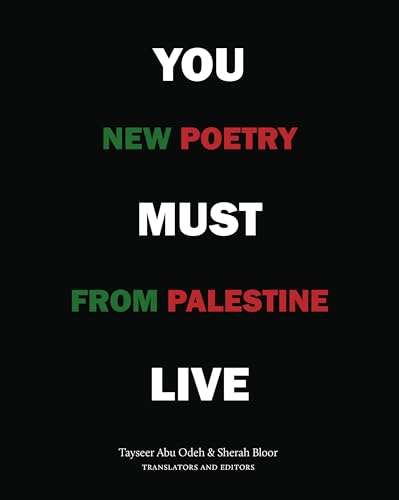
- Bilingual anthology translated from Arabic
- Recent poetry from Gaza and the West Bank
- Includes prayerful, humorous, and elegiac voices
Best For: Readers who want recent bilingual Palestinian poetry grounded in Gaza and the West Bank.
Born Palestinian, Born Black: & The Gaza Suite

- Restored 1996 debut with new preface and added poems
- Includes the Gaza-focused section, The Gaza Suite
- Compact 95-page paperback with contextual essays
Best For: Readers who want a compact, contemporary Palestinian poetry collection with added context and new material
Enemy of the Sun: Poetry of Palestinian Resistance

- Updated 1970 collection with new poems and foreword
- Includes work by twelve poets centered on resistance and hope
- 272-page English edition with strong historical framing
Best For: Readers who want a politically engaged Palestinian poetry collection with historical resonance and updated editorial material
A Map of Absence: An Anthology of Palestinian Writing on the Nakba

- Poetry and prose spanning seventy years of Palestinian writing
- Includes Darwish, Kanafani, Tuqan, and emerging writers
- English-language anthology focused on the Nakba and its aftermath
Best For: Readers who want a wide-ranging anthology of Palestinian writing centered on the Nakba
Out of Gaza

- 72-page English poetry collection on Gaza and resistance
- Includes poets such as Naomi Shihab Nye and Hala Alyan
- Sales support the Palestine Solidarity Campaign
Best For: Readers who want a short, current poetry collection on Gaza
Sumud

- 400-page anthology with poetry, essays, stories, and art
- Includes 46 contributors and 25 black-and-white illustrations
- Emphasizes sumud as steadfastness and cultural resistance
Best For: Readers who want a broad Palestinian reader with poetry and cultural context
The Palestinian Wedding

- English-Arabic anthology of contemporary Palestinian poetry
- 249 pages in a bilingual format
- Useful for readers comparing texts across both languages
Best For: Readers who want a bilingual English-Arabic poetry anthology
Literary Testament – If I Must Die: Poetry and Prose
If you’re comparing Palestinian poetry collections, this one stands out as both a literary gathering and a document of witness. If I Must Die: Poetry and Prose brings together Refaat Alareer’s poetry and prose on teaching, literature, politics, and family, including the poem that became a global sensation after his death.
Best For: Readers who want a powerful, humane collection that blends poetry with reflective prose and lived Palestinian experience.
Pros:
- Includes the title poem “If I Must Die” alongside other poetry.
- Brings together poetry and prose on teaching, family, politics, and literature.
- Contains some pieces never before published.
- Curated by one of Alareer’s closest friends and collaborators.
Cons:
- More reflective and testimonial than a conventional single-genre poetry book.
- Its material is shaped by the context of repeated violence in Gaza.
This is a deeply elegiac volume for readers who value poetry with moral force and intellectual range. It feels especially meaningful if you want a collection that preserves a singular voice and its wider human context.
Poems from Gaza – Things You May Find Hidden in My Ear
Among Palestinian poetry collections, Mosab Abu Toha’s debut is a strong pick if you want intimate writing rooted in Gaza. Things You May Find Hidden in My Ear pairs scenes of political violence with natural beauty, tracing life under siege through the perspective of a child and then a young father.
Best For: Readers looking for an award-winning debut that balances witness, lyricism, and everyday humanity.
Pros:
- Winner of the American Book Award, the Palestine Book Award, and the Derek Walcott Poetry Prize.
- Finalist for the National Book Critics Circle Award for Poetry.
- Combines images of rubble and surveillance with tea, roses, and sea light.
- Includes an in-depth interview about Gaza, family origins, and Abu Toha’s path to poetry.
Cons:
- Its subject matter is intensely shaped by siege and repeated military attacks.
- The brevity of the book may leave readers wanting more from the debut.
This collection offers both urgency and grace, making it especially compelling for readers who want poetry that is direct, grounded, and emotionally resonant.
Anthology of Resistance – Heaven Looks Like Us
If you’re shopping for Palestinian poetry collections with a wider anthology format, Heaven Looks Like Us: Palestinian Poetry offers a broad cross-section of voices. Edited by George Abraham and Noor Hindi, it gathers poems that engage history, exile, grief, queer and feminist perspectives, love, time, and protest.
Best For: Readers who want a contemporary anthology with many voices, themes, and generations represented.
Pros:
- Collects work from established and emerging Palestinian poets.
- Includes contributors such as Refaat Alareer, Mahmoud Darwish, and Naomi Shihab Nye.
- Expands beyond resistance into queer, feminist, ecological, and loving perspectives.
- Frames poetry as narration, self-determination, and liberation.
Cons:
- As an anthology, it is less singular in voice than a solo-author collection.
- Its political scope may be broader than readers wanting a purely lyrical volume.
This is a strong choice if you want a current anthology that situates Palestinian poetry within both struggle and future-making. It’s especially useful for readers who value variety and contemporary editorial framing.
Bilingual New Voices – You Must Live: New Poetry from Palestine
For readers comparing Palestinian poetry collections, You Must Live: New Poetry from Palestine is notable for its bilingual presentation and recent selections from Gaza and the West Bank. Translated from Arabic and edited by Tayseer Abu Odeh and Sherah Bloor, it gathers poets who are currently living in Palestinian territory, many of whom have never left.
Best For: Readers who want a bilingual anthology of recent Palestinian poetry rooted in place and immediate lived reality.
Pros:
- Bilingual edition translated from Arabic.
- Focuses on recent poetry from 2023–2024.
- Brings together voices from Gaza and the West Bank.
- Balances love letters, elegies, prayerful poems, and humor.
Cons:
- Its publication is later than the other titles in this roundup.
- The collection’s immediate political context may feel heavy for some readers.
This anthology is well suited to readers who want a current, multilingual snapshot of Palestinian poetic expression. It emphasizes survival, continuity, and the range of style still possible under pressure.
Contemporary Palestinian Voices – Born Palestinian, Born Black: & The Gaza Suite
If you’re looking for palestinian poetry collections that blend political witness with personal voice, this restored edition of Suheir Hammad’s debut is an easy one to shortlist. It brings back Born Palestinian, Born Black with a new author’s preface, added poems under The Gaza Suite, and contextual essays that help frame the work for new readers.
Best For: Readers who want a compact, contemporary Palestinian poetry collection with added context and new material.
Pros:
- Restored edition of Hammad’s first poetry book, originally published in 1996
- Includes new poems grouped as The Gaza Suite
- Added introductions, afterword, and publisher’s note provide useful context
- Short 95-page length makes it approachable and easy to revisit
Cons:
- Much shorter than a full anthology
- Focused format may leave readers wanting broader coverage of Palestinian writers
As a buying choice, this is best viewed as a slim, focused collection rather than a survey of the field. If you want a single-author book with added framing and new poems, it offers a clear, readable entry point.
Resistance Poetry – Enemy of the Sun: Poetry of Palestinian Resistance
For shoppers comparing palestinian poetry collections, this updated edition stands out for its historical scope and explicitly political focus. It gathers twelve poets linked to a poetics of refusal and hope, and the 2025 edition adds new poems translated by Edmund Ghareeb plus a new foreword by Dr. Greg Thomas.
Best For: Readers who want a politically engaged Palestinian poetry collection with historical resonance and updated editorial material.
Pros:
- Updated edition of a 1970 collection with new translation and foreword material
- Features twelve poets writing from resistance, exile, and imprisonment
- 272 pages provide a fuller reading experience than a slim chapbook
- Strong historical context connects the book to wider struggles for liberation
Cons:
- Heavily political in tone, so it may not suit readers seeking a softer introduction
- Best appreciated by readers comfortable with historical and activist framing
This is a strong pick if you want a collection with both literary and movement history behind it. The updated edition makes it easier to approach now while preserving the urgency that made the original important.
Nakba Anthology – A Map of Absence: An Anthology of Palestinian Writing on the Nakba
If you want palestinian poetry collections with broad literary range, this anthology is a practical place to start. It gathers poetry and prose by Palestinian writers over seventy years, including major voices like Mahmoud Darwish, Ghassan Kanafani, and Fadwa Tuqan, alongside emerging writers translated into English for the first time.
Best For: Readers who want a wide-ranging anthology of Palestinian writing centered on the Nakba.
Pros:
- Combines poetry and prose for a broader literary view
- Includes well-known authors plus emerging voices
- Focuses on the 1948 Nakba and its long aftermath
- 272-page anthology offers substantial reading material
Cons:
- Because it’s an anthology, readers looking for a single poet’s voice may prefer a solo collection
- Its scope is broader than a pure poetry-only volume
This is the most expansive option in the group, especially if you want variety and historical coverage in one book. It works well as a reference point for readers building a deeper shelf of Palestinian literature.
Gaza-focused contemporary voices – Out of Gaza
If you’re looking for palestinian poetry collections that respond directly to the current crisis, Out of Gaza: New Palestinian Poetry is a compact, urgent option. This English-language collection brings together poets writing from and about Gaza, with work shaped by displacement, bombardment, exile, rubble, and survival.
Best For: Readers who want a short, current, politically engaged poetry collection centered on Palestinian witness and resistance.
Pros:
- Features Palestinian poets including Naomi Shihab Nye, Hala Alyan, Lena Khalaf Tuffaha, and more.
- Focused on responses to the Gaza war and its human cost.
- Brief 72-page format makes it easy to read in one sitting.
- Sales support the Palestine Solidarity Campaign, according to the listing.
Cons:
- Very short compared with a full-length anthology.
- Centered on a specific recent crisis, so it is less broad in scope.
As a roundup choice, this book stands out for immediacy and clarity of purpose. It is best suited to readers who want poetry that bears direct witness to catastrophe while remaining compact and accessible.
Wide-ranging cultural anthology – Sumud
For shoppers comparing palestinian poetry collections, Sumud: A New Palestinian Reader offers the broadest mix in this group. It is an anthology that combines memoir, short stories, essays, reviews, personal narrative, poetry, and art, with coverage spanning the 20th and 21st centuries and a strong emphasis on writing from 2021–2024.
Best For: Readers who want a large, multi-genre Palestinian reader that places poetry alongside essays, art, and cultural commentary.
Pros:
- Large 400-page anthology with forty-six contributors.
- Includes poetry plus memoir, essays, fiction, and art.
- Features twenty-five black-and-white illustrations by Palestinian artists.
- Highlights Palestinian culture as a form of steadfastness and resistance.
Cons:
- Not a poetry-only collection.
- Its wide scope may be more than some readers want if they only want verse.
This is the strongest pick if you want context around Palestinian poetry rather than a slim verse-only book. The mix of genres makes it especially useful for readers who want a fuller view of contemporary Palestinian cultural expression.
Bilingual contemporary poetry anthology – The Palestinian Wedding
If you want palestinian poetry collections in both English and Arabic, The Palestinian Wedding: A Bilingual Anthology of Contemporary Palestinian Poetry is the most language-forward option here. The listing identifies it as a bilingual anthology, making it a practical choice for readers who want to compare texts across languages or share poetry in a dual-language format.
Best For: Readers who want a bilingual English-Arabic anthology of contemporary Palestinian poetry.
Pros:
- Bilingual edition in English and Arabic.
- Dedicated specifically to contemporary Palestinian poetry.
- Substantial 249-page anthology.
- Useful for readers studying or reading across both languages.
Cons:
- The supplied listing provides very limited detail about individual poets or themes.
- Less expansive in cultural scope than a broader Palestinian reader.
This edition is a straightforward pick for readers who value language access and a poetry-only focus. If you want a bilingual collection rather than a mixed-genre anthology, it is the clearest fit in this set.
How We Picked These Palestinian Poetry Collections
We selected books that balance literary quality, relevance, and reader value. The list includes widely discussed contemporary voices, anthologies that provide broader context, and editions suited to different reading goals, from introduction to deeper study.
We also looked for variety in format and scope: single-author works, edited collections, and bilingual editions. That makes it easier to choose based on whether you want immediacy, historical framing, or a more comprehensive view of Palestinian literary expression.
Quick Comparison
If you want a direct, personal reading experience, single-author collections often feel most immediate. If you want range and historical context, anthologies are usually the better fit. Bilingual editions can be especially useful for language learners, libraries, and readers who want to engage the Arabic text alongside translation.
Key Buying Factors for Palestinian Poetry Collections
Scope and Focus
Some books center on Gaza, exile, resistance, or the Nakba, while others offer a broader cross-section of Palestinian voices. Choose based on whether you want a focused perspective or a wider literary survey.
Translation and Bilingual Presentation
For readers who value linguistic nuance, bilingual editions can add depth. For accessibility and ease of reading, a strong English translation may be the better choice.
Historical and Cultural Context
Many Palestinian Poetry Collections are enhanced by introductory material, chronology, or editorial framing. These features matter if you are buying for academic use or want context alongside the poems.
Audience and Purpose
Some readers want an entry point to Palestinian literature, while others want books for study, discussion, or collecting. Match the book to your use case rather than choosing only by title or popularity.
Who Should Buy Which Palestinian Poetry Collections?
New readers should start with an accessible anthology or a contemporary collection that offers a clear emotional and political entry point. Readers looking for depth and historical range should prioritize larger anthologies and reader-style editions. If you are building a classroom, library, or book club selection, choose titles that combine strong curation with background notes and representative coverage.
Ultimately, the best Palestinian Poetry Collections are the ones that fit your reading goals: intimate voice, broad context, bilingual engagement, or literary history. This roundup gives you options across all of those needs, so you can choose with confidence.