A great Gaza photography book can do more than show images. It can preserve memory, document daily life, and offer context that helps readers understand the place behind the headlines.
This roundup focuses on standout books for collectors, students, readers of photojournalism, and anyone looking for a more nuanced visual record of Gaza.
Best 10 Gaza Photography Book Picks for 2026
My Gaza: A City in Photographs

- By Gazan journalist Jehad al-Saftawi
- Documents contemporary Gaza through photos and captions
- First book of its kind, 120 pages
Best For: Readers wanting a firsthand, present-day Gaza photo book
GAZA: Legacy of Occupation

- Personal photo essay by Dick Doughty
- Built from intimate access and guidance in Gaza
- 232 pages, published in 1995
Best For: Readers wanting an older, reflective photo essay with intimate access
Gaza Graffiti: Messages of Love and Politics
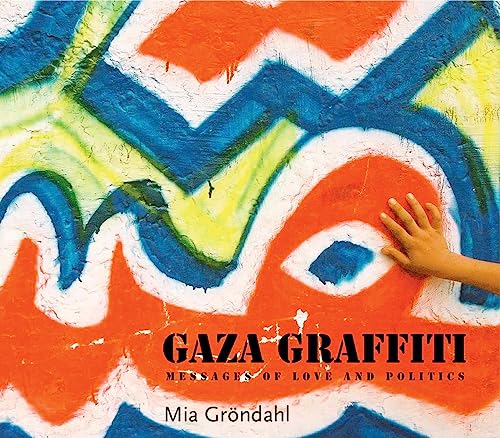
- Mia Grf6ndahl documents seven years of graffiti
- Shows politics, grief, joy, and hope on Gaza’s walls
- 152-page photojournalistic view of street expression
Best For: Readers interested in Gaza’s visual culture and public wall art
Gaza in My Phone

- Drawn reactions to real-time Gaza images
- Black-and-white art with slogans and captions
- 144 pages, published by OR Books in 2025
Best For: Readers who want a visual response to live-streamed Gaza images
Lilies of Gaza: Women Artists in Times of War

- Profiles 22 Palestinian women artists from Gaza
- Mixes personal stories with documentary art material
- Centers resilience, loss, and creative defiance
Best For: Readers seeking an art and testimony-driven Gaza book centered on women’s creative resilience.
Exhibit G: Poems, Essays, and Photographs of Gaza

- Blends poetry, essays, and photographs
- Frames Gaza through Palestinian perspective and grief
- Uses images as part of a broader literary response
Best For: Readers who want photography, poetry, and political reflection in one Gaza-focused book.
Archiving Gaza in the Present: Memory, Culture and Erasure

- Uses photographs, maps, and archival evidence
- Documents Gaza’s cultural life and erasure
- Works as both archive and advocacy resource
Best For: Readers interested in archival, documentary, and cultural-memory coverage of Gaza.
Family survival told through texts and photographs

- Uses photographs and text messages to document daily life in Gaza.
- Follows one family from October 2023 to August 2024.
- Proceeds support TreeWater Initiative’s humanitarian work.
Best For: Readers seeking a firsthand, image-driven Gaza account that supports aid efforts
On-the-ground war coverage from Gaza border

- Firsthand reporting from the October 7 attacks and aftermath.
- Includes interviews across Israeli, Hamas, and civilian perspectives.
- Available as an unabridged audiobook narrated by the author.
Best For: Readers who want hard-news reporting and firsthand conflict context
A visual portrait of memory and everyday life

- Uses illustrations to explore Gaza’s history and daily culture.
- Covers religion, trade, food, craftsmanship, and family life.
- Listed reading age of 6–17 for broader accessibility.
Best For: Families and readers wanting a visual cultural introduction to Gaza
Contemporary Photo Essay – My Gaza: A City in Photographs
If you want a gaza photography book that feels immediate and personal, My Gaza: A City in Photographs is built around Jehad al-Saftawi’s own life in Gaza before his escape in 2016. The book focuses on everyday humanity and tense realities alike, using photographs and captions to present contemporary Gaza from inside the city rather than through outside commentary.
Best For: Readers who want a firsthand, present-day Gaza photo book by a Gazan journalist.
Pros:
- Photographs present contemporary Gaza through the photographer’s lived experience.
- Captions add context to scenes ranging from tenderness to confrontation.
- Offers a perspective that challenges simplistic or propagandistic narratives.
- Large-format, 120-page hardcover-style presentation with substantial visual impact.
Cons:
- Focuses on urgency and conflict, so it is not a light visual coffee-table book.
- At 120 pages, it is relatively brief for readers seeking a long documentary archive.
- The subject matter may be intense for some audiences.
This is the strongest pick if you want a current, ground-level portrait of Gaza rather than a broad historical survey. Its value is in the immediacy of the images and the fact that the work comes from a Gazan photographer documenting his own place and time.
Classic Documentary Travelogue – GAZA: Legacy of Occupation
GAZA: Legacy of Occupation: A Photographer's Journey (Kumarian Press Books for a World That Works)
Check Price On AmazonFor readers comparing a gaza photography book with a more traditional documentary approach, GAZA: Legacy of Occupation: A Photographer’s Journey offers a personal photo essay from Dick Doughty, who had intimate access to the Gaza Strip through his Palestinian host and guide. The book aims to move beyond stereotypes and provide a compassionate look at how Gazans view their own lives.
Best For: Readers who want an older, reflective photo essay with intimate access and a human-centered perspective.
Pros:
- Based on intimate access within the Gaza Strip.
- Combines personal narrative with a photo essay format.
- Explicitly aims to go beyond stereotypes.
- Longer than many photo books at 232 pages.
Cons:
- Published in 1995, so it reflects an older moment in Gaza.
- The smaller 5.5 x 8.5 inch trim size is less display-oriented.
- May appeal more to documentary readers than to those seeking a modern art-book feel.
This is a good choice if you want a historically grounded account with more room to explore context and personal observation. Its strength is the way it frames Gaza through access, conversation, and lived detail rather than headlines alone.
Street-Art and Visual Culture – Gaza Graffiti: Messages of Love and Politics
If your gaza photography book search is really about how images function in daily life, Gaza Graffiti: Messages of Love and Politics is a distinctive pick. Swedish photojournalist Mia Grf6ndahl documents seven years of wall writing in Gaza, showing how graffiti became a public language for politics, grief, joy, and hope.
Best For: Readers interested in Gaza’s visual culture, street art, and the political life of public walls.
Pros:
- Documents graffiti over a seven-year period.
- Shows the role of wall art in communication and political expression.
- Includes both conflict-related messages and everyday moments like weddings.
- Offers an unexpected view of life in Gaza through photographs.
Cons:
- More focused on graffiti than on broad documentary photography.
- The theme is highly specific, so it may not suit readers wanting general Gaza coverage.
- At 152 pages, it is compact rather than exhaustive.
This book stands out because it treats the walls of Gaza as a living archive. It is a smart choice if you want a visually driven book that connects art, politics, and everyday experience in one focused format.
Contemporary Reaction Art – Gaza in My Phone
For a very different kind of gaza photography book shelf addition, Gaza in My Phone turns live social media images into drawn commentary by Lebanese cartoonist Mazen Kerbaj. Created in response to images of Israel’s campaign in Gaza, the book blends black-and-white art, slogans, and captions to process what was being seen in real time.
Best For: Readers who want a visual, immediate response book that reflects on live-streamed images from Gaza.
Pros:
- Transforms real-time phone images into striking black-and-white drawings.
- Combines art with captions and slogans for direct commentary.
- Explores seeing, witnessing, and solidarity as central themes.
- Compact 144-page format with a strong contemporary focus.
Cons:
- It is a drawing-based reaction book, not a conventional photo archive.
- The subject matter is intense and emotionally heavy.
- Its political framing may not suit readers looking for a neutral visual survey.
This book is best understood as a witness piece rather than a standard photo collection. If you want a current, thought-provoking response to Gaza imagery and not just a record of photographs, it is a powerful and timely option.
Women Artists in Gaza – Lilies of Gaza: Women Artists in Times of War
If you’re looking for a gaza photography book that pairs visual documentation with personal testimony, Lilies of Gaza: Women Artists in Times of War offers a focused look at 22 Palestinian women artists from Gaza. Its 126 curated pages center resilience, displacement, loss, and creative resistance, making it a strong choice for readers who want art-driven reporting rather than a conventional photo-heavy album.
Best For: Readers seeking an art and testimony-driven Gaza book centered on women’s creative resilience.
Pros:
- Highlights 22 Palestinian women artists from Gaza.
- Combines life stories with artworks created, lost, or destroyed amid war.
- Offers a curated documentary approach across 126 pages.
- Focuses on survival, hope, and artistic defiance.
Cons:
- Not a traditional standalone photography monograph.
- English-language edition is not available until 2026.
- Best suited to readers interested in art, memory, and testimony.
The strongest appeal here is its documentary intimacy: it frames Gaza through the lived experiences of women artists, not just images alone. For buyers who want a reflective, human-centered Gaza title, this is a distinctive option.
Poems and Images – Exhibit G: Poems, Essays, and Photographs of Gaza
For shoppers comparing a gaza photography book with a more literary, image-rich title, Exhibit G: Poems, Essays, and Photographs of Gaza stands out for its blend of poems, essays, and carefully chosen photographs. Fady Joudah’s book is framed as a Palestinian response to grief, survival, and the ongoing destruction of Gaza, making it a strong fit if you want context and interpretation alongside the visuals.
Best For: Readers who want photography, poetry, and political reflection in one Gaza-focused book.
Pros:
- Combines poems, essays, and photographs in one volume.
- Places Gaza images in a wider Palestinian literary and political context.
- Emphasizes resilience, love, and interior life alongside loss.
- Includes a substantial 208-page format.
Cons:
- More literary than a pure photography book.
- Publication date is future-dated for 2026.
- May be better for reflective reading than quick visual browsing.
This is the most hybrid option in the set, which is exactly what some buyers want: a Gaza title that uses photographs as part of a broader argument. If you want images plus strong writing, it’s a compelling pick.
Memory and Archives – Archiving Gaza in the Present: Memory, Culture and Erasure
If your goal is to find a gaza photography book with a strong documentary and archival angle, Archiving Gaza in the Present: Memory, Culture and Erasure is a practical choice. It brings together voices from Palestine and beyond to document cultural erasure, and it uses visual material such as maps, artworks, photographs, and forensic documentation to show what has been lost and what persists.
Best For: Readers interested in archival, documentary, and cultural-memory coverage of Gaza.
Pros:
- Includes photographs alongside maps, artworks, and forensic material.
- Documents Gaza’s cultural life and the destruction of heritage.
- Brings together multiple contributors from Palestine and beyond.
- Functions as both an archive and a call to action.
Cons:
- More archival than photo-centric.
- Likely best for readers seeking context and documentation.
- Not designed as a light or purely visual coffee-table book.
Among these options, this title is the most clearly oriented toward preservation and evidence. If you want a Gaza book that uses images as part of a broader record of memory and erasure, it offers substantial depth.
Most Immediate Witness Account – Family survival told through texts and photographs
If you’re looking for a Gaza photography book that feels immediate and personal, this title stands out for its raw, document-like approach. It follows Amira Alzaneen’s family in the Gaza Strip from October 2023 to August 2024 through ongoing text messages and photographs, giving readers a close view of daily survival rather than a distant overview.
Best For: Readers who want a firsthand, image-driven account of life in Gaza and a book that directly supports humanitarian work.
Pros:
- Combines photographs with real-time text exchanges for a vivid, intimate format.
- Centers one family’s experience across a long, high-stakes period.
- Proceeds support TreeWater Initiative’s work in Gaza and Palestine.
- English-language edition with 306 pages of substantial material.
Cons:
- Its focus is a personal survival story, not a broad historical survey.
- May be emotionally intense for readers seeking a lighter photo book.
As a Gaza photography book, this is best suited to readers who value witness, testimony, and humanitarian context over general travel or art photography. The mix of messaging and images makes it feel immediate and grounded in lived experience.
Best for War Journalism – On-the-ground war coverage from Gaza border
Black Saturday: An Unfiltered Account of the October 7th Attack on Israel and the War in Gaza
Check Price On AmazonFor shoppers comparing a Gaza photography book with a more journalistic war account, this title is a strong pick if you want reporting rooted in firsthand observation. Trey Yingst covers the October 7, 2023 attacks and the war that followed, drawing on his time on the Gaza border and interviews with people on multiple sides of the conflict.
Best For: Readers who want a hard-news, firsthand journalism perspective on the October 7 attacks and the war in Gaza.
Pros:
- Written by a war correspondent who witnessed the events near the Gaza border firsthand.
- Includes multiple perspectives through interviews with Israeli, Hamas, and civilian contacts.
- Provides a detailed chronology of October 7 and the conflict that followed.
- Available as an unabridged audiobook narrated by the author.
Cons:
- This is not primarily a photography-focused book.
- Its emphasis is reporting and testimony, not visual documentation.
If you want context, interviews, and field reporting more than images, this book fits that need well. It’s a useful companion choice for readers interested in the broader conflict narrative surrounding Gaza.
Most Cultural and Visual – A visual portrait of memory and everyday life
If your idea of a Gaza photography book is one that highlights place, memory, and daily life, this Japanese edition offers a quieter cultural approach. It presents Gaza’s history and contemporary life through beautiful illustrations and an art-documentary style that moves from trade and religion to food culture, craftsmanship, and the rhythms of everyday people.
Best For: Readers, families, and younger audiences interested in a visual introduction to Gaza’s culture and daily life.
Pros:
- Blends illustrated visuals with documentary-style cultural storytelling.
- Covers a wide range of themes, including history, religion, craft, food, and daily life.
- Reading age is listed as 6–17, making it accessible for younger readers.
- Large 141.1 MB file size suggests a richly visual edition.
Cons:
- It is published in Japanese, which limits accessibility for non-Japanese readers.
- Enhanced typesetting, Word Wise, and Page Flip are not enabled.
This is a good choice if you want a visually rich, culturally focused book rather than an urgent conflict narrative. Its strength is in showing Gaza through memory, beauty, and everyday experience.
How We Picked the Best Gaza Photography Book
We favored titles that combine strong visual content with clear editorial purpose, whether the focus is documentary photography, artistic expression, archive-building, or firsthand witness. We also looked for books with lasting value beyond current events, including historical depth and cultural context.
Quick Comparison
The best Gaza Photography Book for you depends on what you want most: a broad visual history, a politically charged photo essay, an artist-centered perspective, or a hybrid work that blends images with essays and testimony. Some titles are better for general readers, while others are stronger for researchers, students, and collectors.
Key Buying Factors for a Gaza Photography Book
Image Quality and Reproduction
Look for clear printing, strong contrast, and thoughtful layout. A photography book loses impact if the images are muddy, overcompressed, or poorly sequenced.
Context and Captions
The best editions explain where, when, and why images were made. Good captions and essays matter because they turn photographs into usable historical material rather than just isolated visuals.
Editorial Approach
Some books are documentary and journalistic, while others are poetic, archival, or interpretive. Choose the tone that matches your purpose: study, gifting, collecting, or personal learning.
Language and Edition Details
Pay attention to translation, bilingual formatting, and edition notes. With a Gaza Photography Book, these details can affect accessibility, especially for international readers and gift buyers.
Who Should Buy Which Gaza Photography Book?
If you want a broadly accessible visual overview, choose a title centered on city scenes or a strong documentary sequence. If you want deeper political and cultural context, pick books that mix photographs with essays, history, or witness testimony. For art-focused readers, titles about artists, graffiti, or memory may offer the richest experience. Collectors and researchers may prefer editions with archival framing, stronger metadata, and more substantial critical text.
In short, the right choice depends on whether you want documentation, reflection, or a blend of both. The strongest Gaza Photography Book will match the reader’s interests and provide images that remain meaningful long after the first viewing.